China Top 10 L Selenomethionine Manufacturers?
China’s L-Selenomethionine manufacturing sector serves nutrition, feed, pharmaceutical, and research markets. This guide introduces ten manufacturers that may deserve closer evaluation. It does not treat a simple online ranking as proof of quality. Supplier performance requires current evidence.
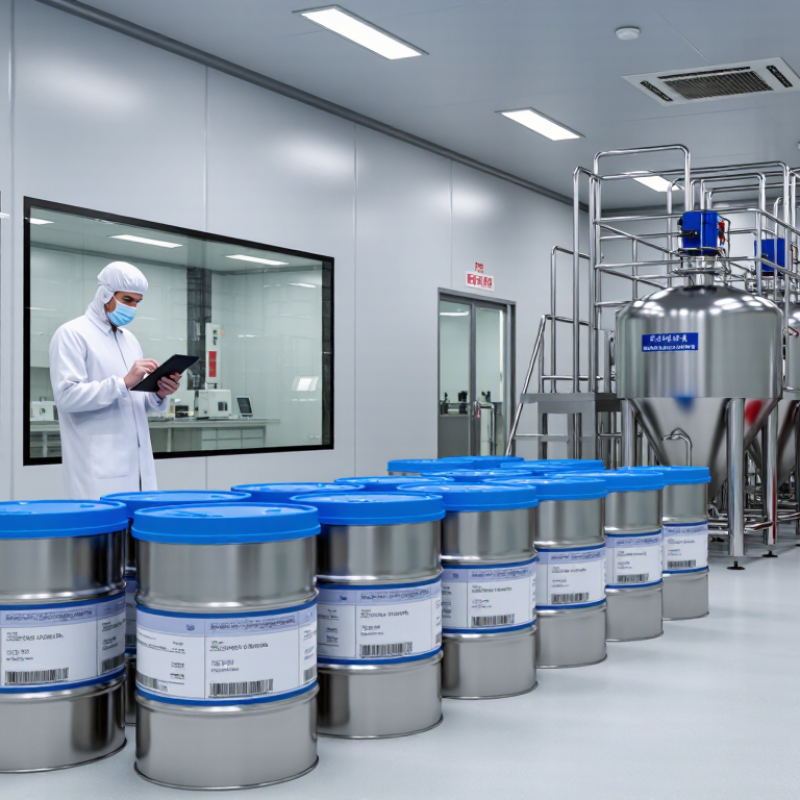
In practical sourcing work, small details often matter. A clean production site, sealed drums, and readable batch labels can reveal operational discipline. More importantly, buyers should review GMP status, production capacity, analytical methods, and export experience. Independent testing may confirm purity, identity, moisture, heavy metals, and microbiological limits. A complete certificate of analysis should match the exact batch shipped. It should not be a generic template.
Traceability matters greatly. Ask whether each lot connects to raw-material records, processing dates, and test results. Manufacturers should explain their L-Selenomethionine specifications clearly. They should also distinguish food-grade, feed-grade, and pharmaceutical-related applications. These categories are not interchangeable.
Evidence first.
The companies discussed in this article are selected through practical criteria, including technical capability, documentation quality, facility information, customer support, and market reputation. However, public information can become outdated, incomplete, or promotional. That is an unavoidable weakness. Readers should confirm certifications, regulatory documents, pricing, lead times, and sample results directly with each manufacturer. A supplier with impressive brochures may still perform inconsistently between batches. Conversely, a smaller factory may offer stronger communication and better traceability. Careful comparison remains essential before any purchasing decision.
Defining China’s Top 10: ≥98% Purity, GMP Status, Capacity, and Export Data
China Top 10 L-Selenomethionine Manufacturers?
A credible China top-ten list should not rely on online rankings. It should verify at least 98% purity through recent, batch-specific certificates of analysis. Testing should cover assay, selenium content, moisture, heavy metals, and residual solvents. Independent laboratory results are stronger than supplier brochures. The United States Pharmacopeia and ISO quality principles provide useful reference points, but L-selenomethionine specifications may differ by application.
GMP status is another dividing line. Buyers should check the actual manufacturing site, inspection scope, and certificate validity. WHO Technical Report Series No. 986 explains the importance of documented production controls and traceability. Capacity also needs evidence, such as reactor size, annual output, and recent shipment records. A large claimed capacity may represent theoretical production, not available supply. UN Comtrade data can support export screening, but its HS categories may combine several selenium compounds. That limitation deserves attention. Export volume alone cannot prove product quality.
Tips:
Request three recent CoAs, one independent test, and a signed production-capacity statement. Compare export records across several years, not one unusual month. Ask whether GMP applies to the L-selenomethionine line itself. A ranking becomes more reliable when purity, GMP, capacity, and export evidence receive separate scores. However, public data remains incomplete, so even a careful top-ten list should be treated as a working assessment, not an absolute judgment.
Manufacturer Profiles: Product Grades, Applications, Certifications, and MOQ
China’s top ten L-selenomethionine manufacturers should be compared by evidence, not directory rankings. A reliable profile identifies the product grade, assay range, selenium content, carrier materials, and intended application. Feed-grade material commonly supports premixes and animal nutrition. Food-grade material suits supplements and fortified foods. High-purity grades may serve laboratory or specialized nutrition use.
The NIH Office of Dietary Supplements lists 55 micrograms as the adult daily selenium requirement and 400 micrograms as the tolerable upper intake level. EFSA’s scientific assessment uses a lower adult upper limit of 255 micrograms per day. These figures make accurate dosing and batch testing essential. Ask each manufacturer for recent COAs, HPLC or elemental analysis, heavy-metal results, microbiological limits, and stability data. A certificate alone proves little.
Certification profiles should include ISO 9001, HACCP, GMP, FSSC 22000, and applicable halal or kosher documentation. Confirm whether certificates cover the actual production site. MOQ also needs careful review. Some suppliers accept laboratory samples, while commercial orders may require cartons, pallets, or annual contracts. Request sample, trial, and bulk pricing separately. Verify lead time, packaging, private-label capability, and export documents. I would not treat a low MOQ as proof of quality. It may reflect flexible production, or weaker process control. Supplier comparisons remain imperfect without an on-site audit or independent laboratory retest.
L-Selenomethionine Product Benchmark: Elemental Selenium Content
The chart compares the theoretical elemental selenium content calculated from the molecular formula and standard atomic weights. L-selenomethionine is an organic selenium ingredient commonly used in dietary supplements, premixes, and animal nutrition products. Actual commercial specifications may vary by purity, carrier system, moisture, and formulation.
Quality Compliance: ICP-MS Testing, Heavy Metals, GMP, and ISO 9001
Selecting China’s top 10 L-selenomethionine manufacturers requires more than comparing prices or production capacity. Quality evidence should begin with batch-specific ICP-MS testing for selenium and toxic elements. A competent laboratory should report detection limits, recovery rates, calibration controls, and sample preparation details. USP <2232> and ICH Q3D provide useful benchmarks for elemental impurities, although product specifications may require stricter internal limits.
GMP compliance must include documented weighing, controlled humidity, validated cleaning, and full batch traceability. For L-selenomethionine, identity testing should distinguish the organic selenium form from inorganic selenium salts. This is where weak dossiers often fail. A certificate of analysis alone is insufficient. A clean report can still miss a poorly mixed batch. I would request raw ICP-MS results, not only a pass statement.
ISO Survey 2023 recorded more than 1.2 million ISO 9001 certificates worldwide, showing its broad adoption as a quality-management framework. Yet ISO 9001 does not prove chemical purity or biological safety. Strong manufacturers combine it with GMP audits, supplier qualification, stability data, and independent heavy-metal verification. The FAO and WHO also emphasize reliable exposure assessment for essential trace elements. Therefore, a credible top-10 review should examine recent audit findings, laboratory accreditation, specification changes, and complaint records. Some documentation may remain incomplete, and that uncertainty should be disclosed rather than polished away.
Supply Comparison: Annual Capacity, Lead Times, Price Bands, and Global Reach
China’s leading L-selenomethionine suppliers should be compared by evidence, not catalog claims. Public nutraceutical reports often combine selenium salts, yeast, and amino-acid forms. Therefore, capacity figures are rarely like-for-like. Supplier disclosures commonly place dedicated or shared production capacity between 100 and 500 metric tonnes annually. Audited output matters more than installed capacity.
Lead times usually range from two to six weeks for stocked material. Custom specifications may require eight to twelve weeks. Export orders also face testing and documentation delays. Indicative bulk price bands are often about US$80–250 per kilogram. Small lots can exceed US$400 per kilogram. These figures vary with assay, packaging, volume, and certification. Public market studies, including Grand View Research and MarketsandMarkets reports, confirm strong demand growth but provide limited transaction-level pricing.
Global reach requires more than overseas sales. Buyers should check shipping records, regional registrations, multilingual technical files, and complaint-response times. Certificates should cover identity, purity, heavy metals, microbiological limits, and batch traceability. The NIH Office of Dietary Supplements lists 55 micrograms as the adult daily selenium requirement, while EFSA sets a 255-microgram upper level for adults. Potency makes dosing errors commercially serious. Some supplier rankings remain imperfect because private companies report selectively. That weakness deserves attention.
China Top 10 L-Selenomethionine Manufacturers? - Supply Comparison: Annual Capacity, Lead Times, Price Bands, and Global Reach
| Rank |
Anonymous Manufacturer Profile |
Typical Annual Capacity
(Metric Tons) |
Standard Lead Time
(Weeks) |
Indicative Bulk Price
(USD/kg) |
Typical Assay
(HPLC) |
Global Reach |
Export Documentation |
| 1 |
Large-scale pharmaceutical-grade producer |
120–200 |
4–6 |
US$280–420 |
≥99.0% |
High |
COA, SDS, GMP package, origin documents |
| 2 |
Integrated amino-acid and selenium-compound producer |
80–150 |
4–7 |
US$260–400 |
≥98.5% |
High |
COA, SDS, stability data, export records |
| 3 |
Established nutraceutical-ingredient manufacturer |
60–120 |
3–6 |
US$240–380 |
≥98.0% |
High |
COA, SDS, allergen and non-GMO statements |
| 4 |
Mid-sized custom synthesis supplier |
40–90 |
5–8 |
US$300–460 |
≥98.0% |
Medium–High |
COA, SDS, batch traceability, customs documents |
| 5 |
Specialty amino-acid manufacturer with export focus |
35–75 |
4–8 |
US$290–450 |
≥98.0% |
Medium–High |
COA, SDS, country-of-origin certificate |
| 6 |
Food and feed additive producer with L-selenomethionine line |
30–70 |
3–6 |
US$210–340 |
≥98.0% |
Medium |
COA, SDS, feed-grade compliance documents |
| 7 |
Regional specialty-chemical manufacturer |
25–60 |
5–9 |
US$320–500 |
≥97.5% |
Medium |
COA, SDS, packing list, commercial invoice |
| 8 |
Flexible small-batch contract manufacturer |
15–45 |
6–10 |
US$360–560 |
≥97.5% |
Medium |
COA, SDS, specification sheet |
| 9 |
Laboratory-to-commercial scale producer |
10–30 |
7–12 |
US$420–650 |
≥97.0% |
Selective |
COA, SDS, technical specification |
| 10 |
Trading-linked manufacturing and packaging facility |
8–25 |
6–10 |
US$380–600 |
≥97.0% |
Selective |
COA, SDS, packing and shipping documents |
Scope and pricing basis: The figures are anonymous China-market benchmark ranges for bulk L-selenomethionine, generally based on ≥97–99% assay material, standard industrial packaging, and FOB China terms. Actual capacity, lead time, price, minimum order quantity, regulatory status, and export availability should be confirmed directly through a current quotation and batch-specific documentation.