
Why Choose Organic Copper for Global Sourcing?
Organic copper is attracting attention among manufacturers seeking traceable, responsible, and technically reliable materials. However, the term requires careful interpretation. In chemistry, it may describe copper bonded with carbon-based compounds. In commercial sourcing, some suppliers use it more loosely to suggest cleaner production or environmentally responsible practices. These meanings are not interchangeable. Buyers should confirm the product’s chemical identity, intended application, purity level, and supporting documentation before making a decision.
Evidence matters more than attractive wording. Experienced sourcing teams review certificates of analysis, batch numbers, production records, and origin information. They may also request independent laboratory testing for copper content, impurities, moisture, and performance stability. A dependable supplier should explain mining, refining, processing, packaging, and transport procedures clearly. Site audits can reveal practical details, such as sealed containers, labeled pallets, and controlled storage areas. Small details often expose larger quality weaknesses.
The environmental case also deserves balanced judgment. Organic copper may support a lower-impact supply strategy when production uses efficient energy systems, responsible waste handling, and transparent supplier oversight. Yet no material should be considered sustainable by name alone. Ask difficult questions. Are claims independently verified? Can the supplier maintain consistent quality across regions? Does the documentation match the shipment? These checks reduce commercial risk and strengthen long-term partnerships. Some sourcing decisions remain imperfect. Exchange rates, transport disruptions, and incomplete public data can affect outcomes. Still, disciplined verification helps global buyers choose Organic copper with greater confidence, accountability, and technical clarity.
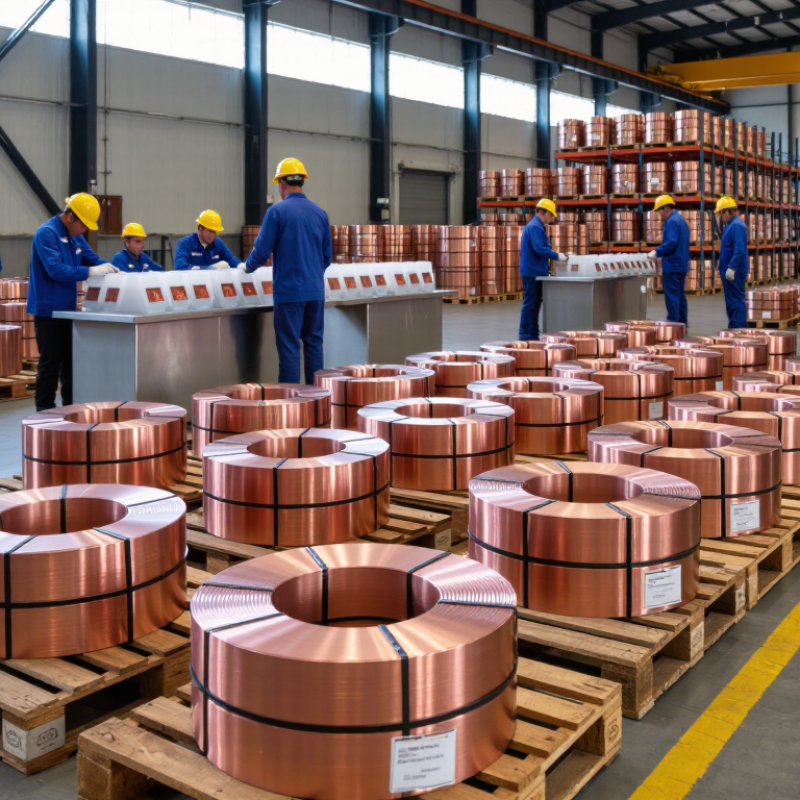
In global sourcing, “organic copper” needs careful definition. Copper itself is a mineral, not an organic material. The term may describe organically bound copper, or a copper input approved for certified agriculture, depending on the market and regulation. These meanings are not interchangeable. Buyers should request the chemical name, copper concentration, production method, safety data, and applicable certification before comparing suppliers.
Scale makes verification important. The U.S. Geological Survey reported about 22 million metric tons of mined copper production worldwide in 2023. The International Copper Study Group forecast refined copper usage at roughly 26 million metric tons in 2024. Such volumes create complex supply chains, where origin records can pass through several processors. A credible sourcing review should examine batch numbers, laboratory assays, chain-of-custody documents, and impurity limits. A sealed sample is useful. It is not enough.
Real procurement work also exposes uncertainty. “Organic” claims can sound precise while remaining legally vague. I have found that a simple specification often prevents costly disputes: intended use, copper form, minimum assay, prohibited contaminants, testing frequency, and document retention period. Third-party testing strengthens confidence, but it does not replace supplier audits. Country rules may also differ. A certificate accepted in one market may need additional evidence elsewhere. The wording should stay cautious, because sustainability claims without traceable data can damage both compliance and buyer trust.
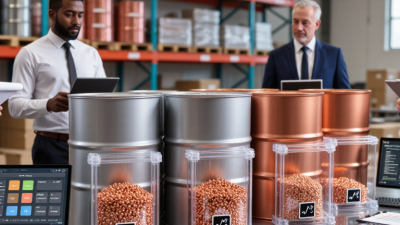
Organic copper refers to copper bonded with carbon-based molecules, not necessarily copper produced under organic certification. Its performance depends on the attached ligand, particle size, purity, and moisture level. Some forms dissolve readily in selected solvents, while others provide controlled release or improved compatibility with polymers. That distinction matters.
In industrial laboratories, organocopper compounds support selective chemical synthesis and catalytic reactions. Copper carboxylates can assist coating, drying, and surface-treatment systems. Certain copper complexes also serve as micronutrient sources in agricultural formulations, where solubility and plant availability require careful control. In electronics and advanced materials, copper-organic structures may help create conductive inks or functional coatings. Results can vary widely.
Global sourcing requires more than comparing copper content. Buyers should review certificates of analysis, ligand identity, residual solvents, moisture, particle distribution, and batch consistency. Packaging should protect the material from heat, light, and humidity during transport. A practical trial is valuable. A powder that performs well in one formulation may react poorly in another. This is where sourcing decisions often become less certain. Clear technical documentation, traceability, and responsive quality support reduce avoidable risks. Small-scale testing should precede larger orders, especially when processing conditions differ between countries.
| Data Dimension | Typical Property or Data | Global Sourcing Relevance | Common Applications |
|---|---|---|---|
| Definition | Organic copper refers to copper-containing compounds with at least one copper–carbon bond or copper coordinated to an organic ligand. It is different from elemental copper metal. | Clarifies specifications, regulatory classification, packaging requirements, and compatibility during international procurement. | Chemical synthesis, catalysis, coatings, electronics, agriculture, and materials processing. |
| Copper atomic mass | 63.546 g/mol for naturally occurring copper. | Supports accurate stoichiometric calculations, formulation control, customs documentation, and analytical testing. | Reagent formulation, catalyst loading calculations, and metal-content analysis. |
| Common oxidation states | Copper(I) and copper(II) are the most common oxidation states in organic copper chemistry. | Oxidation state affects reactivity, shelf life, color, solubility, and compatibility with other formulation components. | Cross-coupling, oxidation, reduction, coordination chemistry, and functional-material production. |
| Representative compound classes | Organocopper reagents, copper carboxylates, copper acetylides, copper β-diketonates, copper alkoxides, and copper complexes with nitrogen-, oxygen-, or sulfur-based ligands. | Allows buyers to compare products by chemical class rather than relying only on commercial names or appearance. | Synthetic intermediates, metal–organic deposition, catalysts, pigments, and specialty coatings. |
| Catalytic activity | Copper compounds can promote C–C, C–N, C–O, and C–S bond-forming reactions, depending on ligand environment and reaction conditions. | High catalytic efficiency may reduce catalyst loading, energy consumption, and process waste. | Click chemistry, coupling reactions, polymer modification, and pharmaceutical intermediate synthesis. |
| Electrical and thermal behavior | Performance varies substantially by ligand and structure. Copper-containing organic materials may provide conductive, semiconducting, or thermally responsive behavior, while they generally do not match bulk copper metal conductivity. | Product selection should be based on measured conductivity, decomposition temperature, film quality, and end-use requirements. | Printed electronics, conductive inks, precursor coatings, sensors, and functional thin films. |
| Solubility and processability | Organic ligands can improve compatibility with selected organic solvents, polymers, or resins; solubility depends on molecular structure, solvent polarity, and temperature. | Improves formulation flexibility and can simplify solution processing, coating, blending, and deposition. | Inks, varnishes, resin systems, coatings, and liquid-phase chemical processing. |
| Air and moisture sensitivity | Some organocopper reagents, especially low-coordinate copper(I) species, are sensitive to oxygen, moisture, heat, or light. Stability is compound-specific. | Requires appropriate container selection, inert-gas handling where specified, moisture control, and transport-condition verification. | Controlled chemical synthesis and specialty laboratory or industrial processes. |
| Thermal stability | Decomposition and melting behavior vary widely among organic copper compounds; a product-specific safety data sheet and technical specification are required. | Important for sea freight, warehouse conditions, process heating, and prevention of thermal decomposition. | Thermal conversion, precursor deposition, heat-treatment processes, and catalyst preparation. |
| Color and physical form | May be supplied as a powder, crystalline solid, solution, or paste. Color can range from white or pale yellow to green, blue, brown, or black, depending on composition and oxidation state. | Appearance is useful for incoming inspection but should not replace identity testing or purity analysis. | Bulk chemical production, coatings, inks, research reagents, and material precursors. |
| Purity and quality indicators | Key indicators include assay, copper content, ligand content, residual solvent, water content, particle-size distribution, and impurities such as chloride or residual metals. | Consistent quality reduces batch variation and supports qualification across multiple international supply sources. | Catalysts, electronic materials, pharmaceutical synthesis, and regulated manufacturing. |
| Packaging considerations | Depending on hazard and stability, packaging may require sealed moisture-resistant containers, light protection, temperature control, or inert-gas filling. | Proper packaging helps preserve specification during long-distance transport and cross-border storage. | International shipment of reactive powders, solutions, and specialty chemical formulations. |
| Regulatory and safety review | Hazard classification depends on the specific compound. Copper compounds may be harmful to aquatic environments, and some organocopper reagents may be reactive or combustible. | Importers should verify the Safety Data Sheet, harmonized tariff classification, transport requirements, labeling, and destination-country regulations. | Responsible sourcing, compliant transportation, safe storage, and environmental risk management. |
| Best-fit sourcing strategy | Select by chemical identity, application performance, purity, stability, documentation, packaging, and total delivered cost rather than price alone. | Creates a more reliable global supply chain and reduces the risk of failed qualification, shipment damage, or regulatory delays. | Long-term procurement programs, dual sourcing, technical-grade materials, and custom formulations. |
Note: Properties such as solubility, decomposition temperature, air sensitivity, and hazard classification are compound-specific and should be confirmed using the applicable technical specification and Safety Data Sheet.
Organic copper is not a universally standardized metals category. In global sourcing, the term may describe copper processed with organic chemicals, lower-impact methods, or documentation focused on environmental practices. Buyers should verify the exact definition before comparing suppliers. The label alone proves little.
Conventional copper usually follows established mining, refining, and manufacturing routes. It can offer predictable specifications, broad availability, and competitive pricing.
Organic copper may provide stronger process transparency when suppliers disclose extraction methods, chemical use, recycled content, energy sources, and waste controls.
These details matter more than attractive wording. Ask for laboratory reports, chain-of-custody records, and current environmental certifications.
Performance still depends on purity, conductivity, tensile strength, surface finish, and dimensional accuracy. A responsibly processed material is not automatically better for every application. Test samples under real operating conditions, especially where heat, moisture, or electrical load changes.
I have found that sourcing discussions often overvalue the word organic and undervalue traceability. That is a mistake.
Cost comparisons also require care. Organic processing may involve smaller production volumes, additional testing, or stricter wastewater controls. Conventional copper may appear cheaper at purchase, yet hidden compliance and quality risks can increase total cost.
Supplier visits, third-party audits, and clear acceptance standards improve reliability. Some documentation may still be incomplete. Record that uncertainty, rather than presenting assumptions as facts.
“Organic copper” needs a clear definition before any purchase begins. Copper is not organic in the biological sense, so suppliers should explain whether the term refers to naturally occurring copper, organic copper compounds, or responsibly sourced material. This distinction prevents costly specification errors. Request purity data, chemical composition, particle size, moisture limits, and the intended application. Independent laboratory testing can confirm the certificate of analysis. Small differences matter.
Certification strengthens confidence, but it does not replace verification. Depending on the product and destination, useful evidence may include ISO quality systems, environmental certifications, responsible sourcing records, and product compliance documents. Ask for certificate numbers, issuing bodies, validity dates, and the covered production site. A document without batch details is weaker evidence. Third-party inspection is valuable before shipment, especially for high-volume orders.
Supply chain visibility deserves equal attention. Trace the material from mine or refinery to processing, packing, and export. Batch numbers, sealed bags, pallet photographs, and customs documents create a practical audit trail. Confirm lead times, minimum order quantities, packaging standards, and backup supply options in writing. Maritime delays and changing export requirements can disrupt even well-planned contracts. Certificates also reflect a specific moment, not permanent perfection. A responsible buyer should recheck quality during production, not only after arrival. That extra step may seem inconvenient, yet it often reveals inconsistent labeling or moisture exposure before the material reaches the factory.
Choosing a reliable organic copper supplier requires more than comparing prices. In sourcing reviews, I have learned that traceability often predicts long-term performance. A dependable supplier should explain the copper source, processing method, and batch identification clearly. Each shipment should include a current certificate of analysis, showing purity, moisture, and possible contaminants. Samples should match the final production material. That detail matters.
Supplier experience is equally important. Ask whether the company understands export documents, packaging conditions, and destination requirements. Reliable teams usually provide stable specifications across several batches. They also answer technical questions with evidence, not vague promises. Independent laboratory testing can verify key claims before a large order. It costs more at first. It may prevent expensive disputes later.
Audits can reveal practical weaknesses. Inspect storage areas, labeling systems, and humidity controls where possible. Organic copper materials may lose consistency when exposed to poor handling conditions. A written quality agreement should define testing methods, acceptance limits, corrective actions, and delivery responsibilities. Communication history also deserves attention. Slow replies can become serious problems during customs delays or production changes. Still, no checklist is perfect. Forecasts change, documents need review, and even experienced suppliers may miss a detail. Build a relationship that allows questions, honest corrections, and regular performance checks.