How to Use Copper Glycinate for Optimal Health Benefits
Copper Glycinate is gaining attention for its potential health benefits. Recent studies indicate its role in enhancing overall well-being. The global demand for essential minerals like copper has risen, with the supplement market projected to grow at a CAGR of 8% by 2030. Research highlights that copper is crucial for energy production and immune function.
Emerging evidence suggests that Copper Glycinate may improve nutrient absorption due to its chelated form. This may lead to better bioavailability and fewer gastrointestinal side effects compared to traditional forms. Professionals suggest that the recommended daily intake of copper for adults is about 900 micrograms, but deficiencies are common in various populations. This mineral also plays a role in collagen formation, promoting skin and joint health.
Using Copper Glycinate offers an opportunity for health optimization. However, the variations in individual responses underscore the importance of personalized approaches. While it can support various bodily functions, excessive intake may lead to toxicity. Therefore, understanding the balance is key. Proper consultation with health professionals is advised before supplementation.

Understanding Copper Glycinate: Composition and Benefits
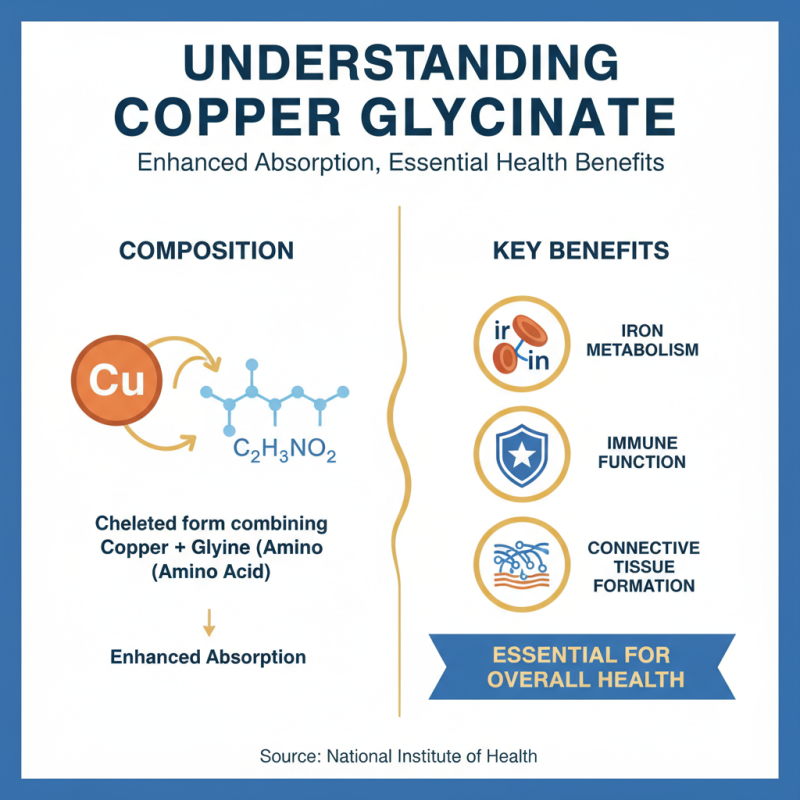
Copper glycinate is a chelated form of copper that combines the mineral with glycine, an amino acid. This combination enhances absorption in the body, making it a popular choice for supplementation. Copper plays a critical role in various physiological functions, including iron metabolism, immune function, and the formation of connective tissue. According to a report from the National Institute of Health, adequate copper intake is essential for maintaining overall health.
Research indicates that copper glycinate supports antioxidant activity, helping to combat oxidative stress in cells. A study published in the "Journal of Nutritional Biochemistry" highlights that copper is vital for the proper function of enzymes involved in energy production and neurotransmitter synthesis. Insufficient copper can lead to fatigue, depression, and weakened immune responses. However, while copper is important, excessive intake can cause toxicity. Monitoring your intake is crucial.
Incorporating copper glycinate into your diet may help optimize health benefits. However, individual needs can vary. Consulting with a healthcare provider before starting any supplement is advisable. Balancing your mineral intake remains a key to achieving well-being. Aim for a diet rich in whole foods, as they provide necessary nutrients. Copper glycinate can complement this but should not replace a healthy lifestyle.
Recommended Dosage of Copper Glycinate for Adults and Children
Copper glycinate has emerged as a popular supplement for promoting overall health. For adults, the recommended dosage typically ranges from 1 to 3 mg per day. This aligns with guidelines suggested by health organizations, which highlight copper's role in iron metabolism and collagen synthesis. Copper is crucial for energy production and maintaining a healthy nervous system.
For children, dosages vary based on age. Children aged 1 to 3 years generally require around 0.4 mg per day. Older children, aged 4 to 8, need about 0.7 mg. According to the National Institutes of Health, adhering to these recommendations is important to prevent deficiencies. Too much copper can lead to toxicity. Expert opinion stresses the need for careful monitoring of copper intake.
While copper glycinate offers potential benefits, it’s essential to engage in self-reflection regarding supplement usage. Individuals may not realize they already receive sufficient copper through their diet, which can include foods such as nuts, seeds, and whole grains. Therefore, a mindful approach is advisable when considering supplementation. Balancing dietary intake and supplementation is key to achieving optimal health benefits.
How to Use Copper Glycinate for Optimal Health Benefits
| Group |
Recommended Dosage (Daily) |
Potential Benefits |
Safety Considerations |
| Adults |
2 mg |
Supports iron absorption, enhances energy production |
Consult a doctor if pregnant or breastfeeding |
| Children (4-8 years) |
1 mg |
Aids in growth and development, supports immune function |
Use under adult supervision, consult a pediatrician |
| Teens (9-18 years) |
1.5 mg |
Promotes healthy bones and connective tissues |
Monitor for signs of excessive intake |
Methods of Incorporating Copper Glycinate into Your Daily Routine
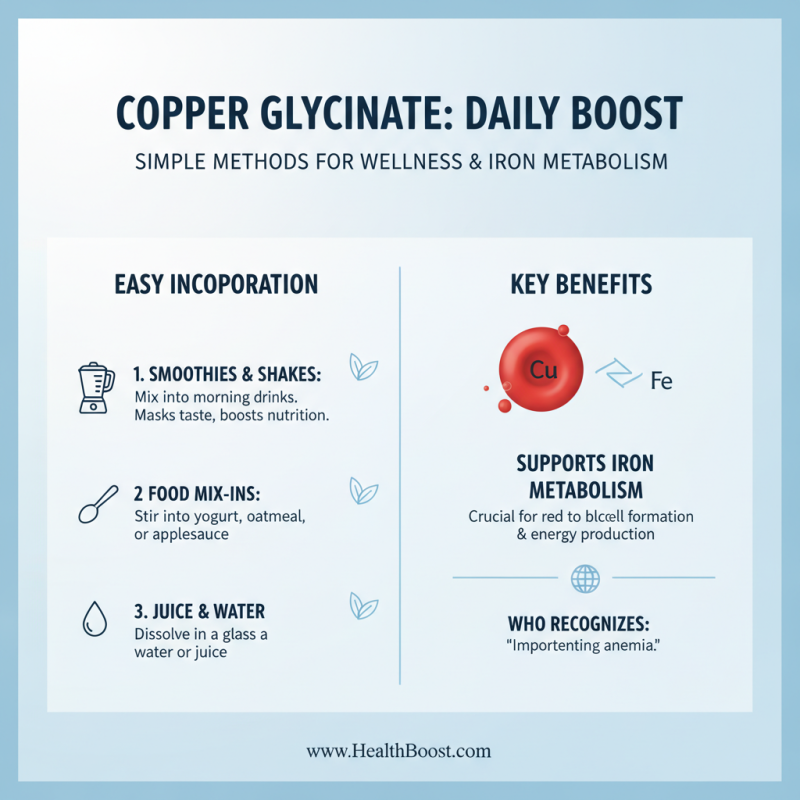
Incorporating copper glycinate into your daily routine can be simple and effective. One common method is to mix the supplement into smoothies or shakes. This approach not only masks the taste but also enhances the nutritional profile of your drink. Studies suggest that copper plays a crucial role in iron metabolism, with the World Health Organization noting its importance in preventing anemia.
Another method is to use copper glycinate in cooking. Adding it to soups or stews during the cooking process ensures you receive its benefits without altering the flavors significantly. The Linus Pauling Institute highlights that adequate copper intake supports various bodily functions, including cardiovascular health and immune function. However, it’s important to reflect on dietary balance. Too much copper can lead to toxicity, with symptoms like nausea or abdominal pain.
Monitoring your copper levels can improve your overall health. A diet high in fiber can inhibit copper absorption; thus, be mindful of ingredient combinations. Some health professionals recommend checking with a healthcare provider before adding new supplements, especially if you have existing conditions. Understanding your body's needs is vital for optimal health.
Potential Side Effects and Precautions When Using Copper Glycinate
When considering the use of copper glycinate, it's important to be aware of potential side effects. Some people may experience gastrointestinal discomfort. This includes symptoms like nausea, diarrhea, or stomach cramps. If these occur, reducing the dosage or discontinuing use may be necessary.
Copper glycinate is generally safe for most individuals. However, excessive intake can lead to toxicity. Symptoms of copper toxicity include headaches, dizziness, and even liver damage in severe cases. Monitoring daily intake and consulting with a healthcare provider is essential to avoid these outcomes.
Certain populations should exercise more caution. Pregnant women and individuals with liver conditions may be more susceptible to issues. It's best to seek advice from a healthcare professional before starting any supplementation. Every person's body reacts differently. Listening to your body and adjusting intake accordingly is crucial for optimal outcomes.
Health Benefits and Side Effects of Copper Glycinate
Combining Copper Glycinate with Other Nutrients for Enhanced Health
Combining copper glycinate with other nutrients can significantly enhance its health benefits. Copper glycinate, a chelated form of copper, is easily absorbed by the body. When taken with vitamins C and E, its antioxidant effects may increase, providing better protection against oxidative stress.
Integrating magnesium is another effective strategy. Magnesium supports numerous biochemical reactions in the body. When paired with copper glycinate, it can improve muscle function and energy production. This combination may also help in reducing fatigue, making it particularly beneficial for athletes or active individuals.
Consider adding zinc to your regimen as well. Zinc and copper work synergistically to maintain balance in the body. However, it’s essential to monitor intake. High levels of zinc can interfere with copper absorption. Listening to your body and reflecting on your nutrient needs is critical. Adjusting dosages may be necessary to achieve optimal results.