Inquiry
Form loading...

What Is Calcium Iodate Used For?

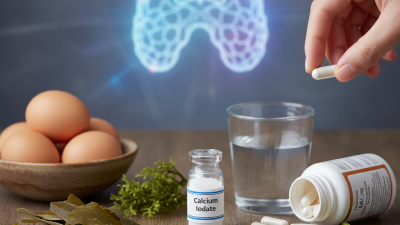
Calcium iodate is an iodine-containing compound used in specific food-processing and animal-nutrition applications. Its purpose depends on the product and local rules. In some approved food uses, it acts as an oxidizing agent in flour treatment; in animal feed, it can provide iodine, a trace mineral needed for normal thyroid function. The label can sound simple. Actual use is not.

The need for reliable iodine sources is well documented. A World Health Organization report on iodine deficiency cites a global estimate of 1.9 billion people with insufficient iodine intake. This is a historical estimate, not a current headcount, but it shows why iodine supply remains a public-health concern. For feed applications, the European Food Safety Authority’s FEEDAP Panel assessed calcium iodate anhydrous as an iodine source for all animal species in its 2013 opinion (EFSA Journal 11(2):3109). That assessment helps explain its role, but it does not mean every product or use is automatically appropriate.

Small amounts matter. Calcium iodate is not interchangeable with every iodine compound, and approved applications, limits, and labeling requirements vary by jurisdiction. Its handling and use should follow the relevant technical specification and product guidance. This article explains where calcium iodate is used, what it does, and why its grade and application matter. A cautious detail is worth keeping in view: a compound’s useful function does not, by itself, establish that every use is suitable.
What Is Calcium Iodate Used For?

Chemical Identity and Properties of Calcium Iodate

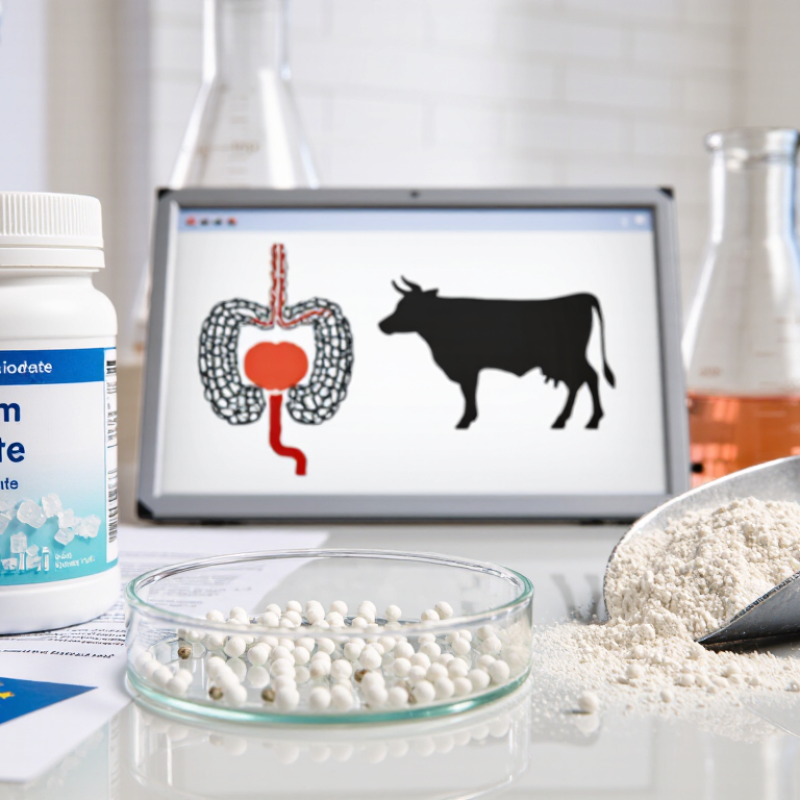
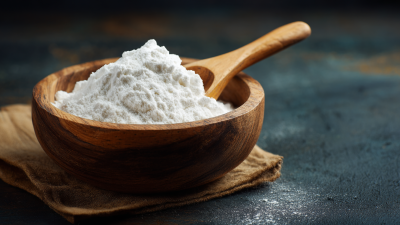
Calcium iodate is an inorganic compound with the formula Ca(IO3)2. Each formula unit contains one calcium ion and two iodate ions. Iodine is in the +5 oxidation state, bonded to oxygen within each iodate ion. The anhydrous compound has a molar mass of about 389.9 grams per mole. It commonly appears as a white, odorless crystalline powder. Small detail, but important: hydration and particle size can change how a sample looks.

Calcium iodate is sparingly soluble in water, so it does not dissolve as readily as table salt. Some forms contain water molecules within their crystal structure; these hydrates have different formula masses and may behave differently. That distinction matters when calculating iodine content. Calcium iodate can serve as a measured iodine source in certain feed and nutritional formulations, where the specified form and amount matter. Its iodate component also has oxidizing properties, so compatibility with other materials should be considered during handling. In practice, a formula alone does not describe every sample; a current technical specification can clarify its hydration state and measured composition.
Use in Animal Feed as a Source of Iodine

What Is Calcium Iodate Used For?
Use in Animal Feed as a Source of Iodine

In animal feed, calcium iodate provides iodine, a nutrient animals need to produce thyroid hormones. These hormones help regulate metabolism and support normal growth and development. The ingredient may be included in premixes or complete feeds, depending on the animal’s needs and the rest of its diet. Small amounts matter. A simple feed label can make iodine planning look straightforward, but it isn’t always.

Iodine levels can vary across feed ingredients, so nutritionists consider the whole ration rather than adding calcium iodate by guesswork. The appropriate inclusion rate depends on factors such as species, age, production stage, and existing dietary iodine. Too little iodine may not meet an animal’s needs; excess iodine can also cause problems. Use a feed-grade source, weigh it accurately, and blend it thoroughly to help distribute it evenly. Calcium iodate is a nutrient source, not a treatment for illness.

Tips: Check the complete feed formulation before adding an iodine source. Keep the product dry and follow its handling directions. When a ration changes, review its iodine contribution again. Small details count.

Calcium Iodate as an Iodine Source in Animal Feed

The chart compares the theoretical iodine content by weight of two forms of calcium iodate.

Values are calculated from the chemical formulas: anhydrous calcium iodate, Ca(IO₃)₂, contains approximately 65.1% iodine by mass; calcium iodate monohydrate, Ca(IO₃)₂·H₂O, contains approximately 62.2%. Feed inclusion should be determined through appropriate formulation and applicable regulations.

Role in Iodine Fortification of Food and Salt

Calcium iodate is a mineral compound that can provide iodine for food fortification where local food standards permit its use. Iodine supports normal thyroid hormone production, but people need only small, carefully controlled amounts. In salt, fortification aims to distribute iodine through a familiar ingredient used regularly in cooking. The amount must be calculated from the compound’s iodine content, not simply its total weight. Small details matter.

Salt is not always an easy carrier. Moisture, heat, storage time, and packaging can affect how well iodine remains in the product. Calcium iodate may be considered for its stability in certain conditions, although potassium iodate is more commonly specified in many salt-iodization programs. The suitable compound depends on the product and applicable standards. Food producers need accurate weighing, even mixing, and laboratory checks to confirm iodine levels. A scoop that looks consistent is not proof of uniform distribution. Fortification also needs to reflect local diets: too little may fail to address low intake, while excess iodine can be harmful. There is no one-size-fits-all recipe, and that limitation deserves attention.

Industrial and Laboratory Applications

Calcium iodate is used as a controlled source of iodine in industrial formulations. In some animal-feed premixes, it helps supply iodine in measured amounts. Formulators consider its iodine content, stability, and compatibility with other ingredients. Small differences matter. Dust control and accurate weighing are important when handling the dry material. Its role is specific, not universal; suitability depends on the product and applicable quality requirements.

In laboratories, calcium iodate can serve as an iodine-containing reagent in selected oxidation and analytical procedures. Under suitable acidic conditions, iodate can react with iodide to release iodine, which may then be measured or used in a reaction. Solubility can limit its usefulness, so analysts should check the method before choosing it. It is not interchangeable with every iodate salt. Researchers should consult the substance’s safety data and follow their laboratory’s procedures for storage, protective equipment, and waste handling.

A practical detail is easy to miss: the calcium form may behave differently from more soluble iodates in a tightly timed experiment.

Safety, Handling, and Regulatory Considerations

Calcium iodate supplies iodine in some approved animal-feed applications, but its handling needs care. Treat it as an oxidizing salt: keep containers closed, dry, and away from combustible materials and reducing agents. Use local exhaust when pouring or blending powder, and wear safety glasses and suitable gloves. A dusty scoop or residue on a workbench can be easy to overlook. Clean spills using the product’s safety data sheet, not an improvised method. Check again.

Regulatory controls depend on the product, intended use, animal species, and jurisdiction. In the European Union, Commission Implementing Regulation (EU) 2015/861 addresses calcium iodate as a feed additive; users should confirm current authorization and iodine limits for their specific feed. For context, the U.S. National Academies’ 2001 Dietary Reference Intakes set an adult iodine upper intake level of 1,100 micrograms per day. That is a nutrition benchmark, not an occupational exposure limit or a feed-use allowance. Keep feed-use records, follow supplier documentation, and avoid applying human intake guidance to workplace decisions. Even careful procedures can miss small details, so periodic review of labels and handling routines is worthwhile.

What Is Calcium Iodate Used For? — Safety, Handling, and Regulatory Considerations

Dimension Information Practical Consideration
Substance identity Calcium iodate is an inorganic iodine compound. Its formula is Ca(IO3)2, and its anhydrous form has a molar mass of approximately 389.88 g/mol. Confirm the specific form and grade from the product label and safety data sheet; hydrated forms may have different properties.
Common use It can be used as a source of iodine in animal-feed formulations, where iodine is a required nutrient for livestock. Use only in accordance with the applicable feed specification and formulation instructions. Do not estimate a dose from this table.
Other applications Calcium iodate may also be used in laboratory or industrial settings as an iodine-containing chemical reagent or raw material. Suitability depends on the required purity, process, and intended application; feed-grade material is not automatically suitable for other uses.
Oxidizing properties Calcium iodate is an oxidizing substance. Oxidizers can intensify a fire or promote combustion when they contact combustible or readily oxidizable materials. Keep it away from heat, ignition sources, and incompatible materials, including combustible substances, reducing agents, and other incompatibles listed in the SDS.
Exposure precautions Dust may irritate the eyes, skin, or respiratory tract. The exact hazard classification and first-aid guidance depend on the supplied product and its current safety data sheet. Avoid creating or breathing dust. Wear suitable eye protection, gloves, and protective clothing, and follow workplace exposure-control procedures.
Storage and handling Store in a tightly closed, clearly labelled container in a cool, dry, well-ventilated area. Protect from contamination and moisture where the supplier recommends it. Use clean, dry handling equipment and good housekeeping. Follow the SDS for spill response, cleanup, and disposal; do not sweep or handle a spill in a way that disperses dust.
Regulatory status Requirements vary by country, jurisdiction, product grade, and intended use. Authorization for one use, such as animal feed, does not establish authorization for food, pharmaceuticals, or other applications. Check current local chemical-inventory, workplace-safety, transport, feed, and environmental rules before purchase or use. Verify any required registration, labelling, and purity specifications.
Transport and disposal Transport classification and waste requirements depend on the applicable rules and the product’s composition, packaging, and quantity. Consult the current SDS and relevant transport and waste regulations. Do not discharge material to drains or the environment unless specifically permitted.

Important: This table provides general information, not a product-specific safety assessment or regulatory determination. Consult the current safety data sheet and competent local authorities for the material and intended use.