Inquiry
Form loading...
Sourcing Calcium iodate requires more than comparing quoted prices. Global buyers must examine purity, iodine concentration, product form, packaging, documentation, and delivery reliability. A supplier may appear competitive while offering weak batch control or incomplete technical files. That difference matters.
“Small quantities can have major nutritional consequences,” says animal nutrition expert Dr. Peter F. Surai, highlighting the importance of trace-mineral accuracy. Calcium iodate is commonly evaluated for iodine supplementation in regulated animal-feed applications. Buyers should request a recent certificate of analysis, specification sheet, safety data sheet, production date, and batch number. Clear records build confidence.
The strongest suppliers explain their quality systems. Look for controlled manufacturing, traceable raw materials, consistent assay results, and practical export experience. Packaging should protect the product from moisture, contamination, and rough handling during long-distance transport. A sealed 25-kilogram bag tells part of the story. The paperwork tells the rest.
This guide reviews seven Calcium iodate suppliers for global buyers. It considers product consistency, technical support, manufacturing capacity, certification practices, minimum order quantities, and shipping responsiveness. Regional suitability also matters. A supplier serving Europe may not offer the same documentation or lead time for buyers in Southeast Asia, Africa, or South America.
No supplier is perfect. Some publish limited information. Others respond slowly. Buyers should verify every important claim independently, especially before approving a new source. The ranking is therefore a practical starting point, not a substitute for laboratory testing or regulatory review. Careful procurement protects formulation accuracy, animal nutrition programs, and long-term supply continuity.
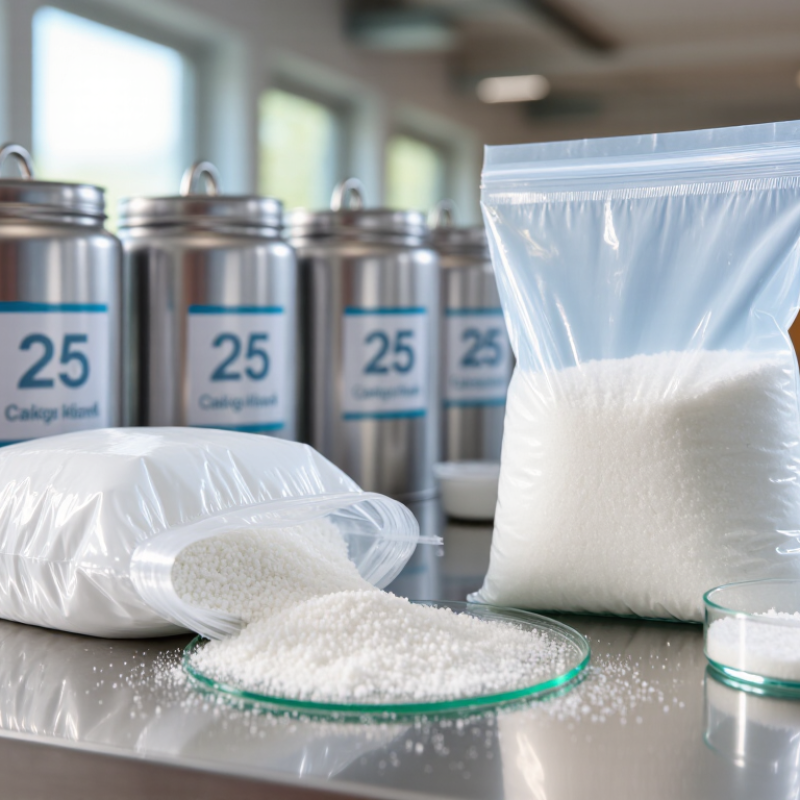
Calcium iodate is an iodine source used mainly in animal nutrition and selected food applications. Its chemical formula is Ca(IO3)2. The material usually appears as a white powder or fine granule. Manufacturers may offer anhydrous or hydrated forms, depending on production and customer requirements. These forms can differ in iodine concentration, moisture, flowability, and storage behavior.
For global buyers, product selection should match the intended application. Feed producers often examine assay, iodine content, particle size, heavy metals, and microbiological results. Food-related buyers may require stricter documentation and local approval checks. A current certificate of analysis, safety data sheet, batch traceability, and clear packaging information are essential. Small details matter. Poorly sealed bags can cause caking during humid sea transport. That issue is easy to underestimate.
The global market includes producers, regional distributors, and specialized premix suppliers. Demand is influenced by livestock production, mineral fortification programs, feed manufacturing, and regional nutrition policies. However, market comparisons are not always simple. One supplier may quote a lower price but exclude testing, inland delivery, or moisture-resistant packaging. Buyers should compare the complete landed cost instead. I would also question unusually precise delivery promises, especially during port congestion or seasonal demand. Supplier audits, retained samples, and independent laboratory verification can reduce avoidable risk, although they add time and expense. Calcium iodate is a technical product, not merely a commodity powder.
| Supplier Profile | Preferred Product Form | Core Chemical Data | Typical Buyer Application | Key Quality and Compliance Documents | Common Export Packaging | Best-Fit Global Market |
|---|---|---|---|---|---|---|
| 1. Feed-Grade Anhydrous Specialist | Calcium iodate anhydrous; white to off-white crystalline powder |
Formula: Ca(IO3)2 Molecular weight: approximately 389.89 g/mol Theoretical iodine content: approximately 65.1% |
Mineral premixes, compound feed, livestock and poultry nutrition, and controlled iodine supplementation | Certificate of Analysis, Safety Data Sheet, heavy-metal results, microbiological statement, traceability record, and feed-safety certification where required | Typically 20–25 kg moisture-resistant bags; larger shipments may use 500–1,000 kg flexible intermediate bulk containers | Asia-Pacific, Europe, the Middle East, Africa, and Latin America |
| 2. Feed-Grade Hydrated-Form Specialist | Calcium iodate hexahydrate or another declared hydrated form |
Representative formula: Ca(IO3)2·6H2O Molecular weight: approximately 497.97 g/mol Theoretical iodine content: approximately 51.0% |
Animal-feed premixes where the buyer specifies a hydrated product for formulation, handling, or regional registration purposes | Declared hydration state, iodine assay, moisture or loss-on-drying result, impurity profile, batch number, and storage-stability information | Sealed multiwall bags or lined sacks; packaging should protect the product from moisture and contamination | Markets using registered feed additives with form-specific labeling requirements |
| 3. High-Purity Reagent Supplier | Laboratory or analytical-grade calcium iodate, supplied against a lot-specific specification |
Chemical identity: calcium iodate Common CAS reference: 10102-68-8 for anhydrous calcium iodate Exact assay, impurities, and hydration state must be confirmed on the lot certificate |
Reference standards, analytical method development, research, and quality-control laboratories | Lot-specific Certificate of Analysis, analytical method, uncertainty statement where applicable, SDS, and chain-of-custody information | Small sealed laboratory containers, commonly ranging from gram quantities to 1 kg | Research, pharmaceutical quality-control, food-testing, and academic laboratory markets |
| 4. Premix-Ready Micronutrient Supplier | Fine, uniform calcium iodate powder suitable for low-dose premix blending |
Product value depends on assay and dosage basis Buyers should compare iodine content on an elemental-iodine basis rather than by gross product weight |
Vitamin-mineral premixes, mineral blocks, poultry feed, dairy feed, and swine feed | Particle-size distribution, homogeneity data, iodine assay, flowability information, contaminant limits, and recommended inclusion guidance | Small bags for premix production or bulk lined sacks for industrial blending | High-volume feed manufacturing regions with established premix industries |
| 5. Regulatory-Focused Export Supplier | Registered feed-grade calcium iodate in the exact form accepted by the destination authority |
Specification must state formula, hydration state, minimum iodine level, moisture, and impurity limits Registration status is destination-specific and should not be assumed from one jurisdiction to another |
Importers and distributors requiring customs-ready and regulatory-ready shipments | Commercial invoice, packing list, Certificate of Origin, SDS, COA, product specification, allergen statement where requested, and applicable feed-additive registration documents | Export pallets with moisture barrier, tamper-evident seals, and lot-level labeling | European Union, United Kingdom, Gulf markets, China, India, Southeast Asia, and other regulated destinations |
| 6. Bulk-Logistics Supplier | Commercial feed grade supplied in palletized or containerized quantities |
Suitable for recurring procurement programs Commercial evaluation should include net iodine delivered, product loss, shelf life, and moisture protection during transit |
Large feed mills, premix plants, agricultural distributors, and long-term contract buyers | Batch traceability, pre-shipment inspection option, loading photographs, shipping documents, shelf-life declaration, and transport-storage instructions | 500–1,000 kg flexible intermediate bulk containers or multiple palletized bags, subject to supplier qualification | International container trade and high-volume regional distribution networks |
| 7. Customized-Packaging and Private-Specification Supplier | Calcium iodate packed to buyer-defined labeling, language, pallet, and dosage requirements |
Product identity and assay must remain consistent with the approved specification Custom labels should state net weight, lot number, production date, expiry or retest date, storage conditions, and iodine content where required |
Regional distributors, feed-additive importers, contract manufacturers, and buyers serving multiple countries | Approved artwork, bilingual or multilingual label, COA, SDS, quality agreement, change-control procedure, and complaint-handling process | Retail-size sacks, distributor cartons, or palletized industrial bags depending on the destination market | Multi-country distribution programs requiring consistent documentation and localized packaging |