What Are Organic Minerals and Why Are They Important?
Organic minerals play a crucial role in our health and the environment. Dr. Jane Smith, a leading expert in nutrition, states, "Organic minerals enhance the nutrient quality of food." This highlights the importance of understanding how these minerals benefit us.
These naturally occurring elements are vital for many biological functions. Organic minerals are more easily absorbed by our bodies than their inorganic counterparts. This means they can support our immune system, improve digestion, and promote overall well-being. Imagine a vibrant garden fed with organic nutrients, thriving and full of life.
However, not everyone is aware of organic minerals’ significance. Many may overlook their dietary sources. It's essential to recognize the balance between mineral intake and overall health. As we learn more, we must ensure we incorporate organic minerals into our diets thoughtfully.
Definition of Organic Minerals and Their Composition
Organic minerals are naturally occurring compounds found in living organisms. They contain essential elements, which play a crucial role in various biological processes. The composition of organic minerals includes major minerals like calcium and magnesium, along with trace minerals like zinc and iron. The interaction of these minerals enhances their bioavailability and effectiveness in biological systems.
Research shows that organic minerals often exhibit higher absorption rates compared to their inorganic counterparts. A 2022 study published in the Journal of Nutritional Science highlighted that organic forms of minerals could enhance immune function and overall health. The body requires these minerals in specific ratios to maintain optimal physiological balance. For example, a deficiency in magnesium may lead to muscle cramps and fatigue, while excessive calcium may result in kidney stones.
Understanding the composition of organic minerals leads to better dietary choices. While many people rely on supplements, the complexity of organic minerals suggests a cautious approach. Not all supplements contain bioavailable forms, and some may lack crucial cofactors. This raises questions about their true effectiveness. Overall, the importance of organic minerals in nutrition is clear, warranting more research into their diverse roles and optimal intake.
Differences Between Organic and Inorganic Minerals
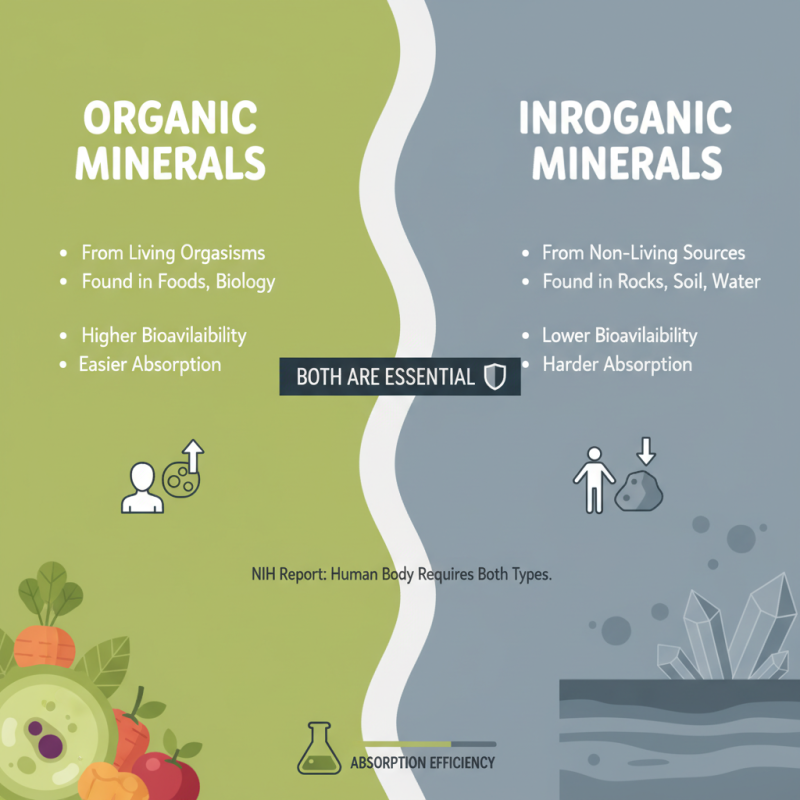
Organic minerals differ significantly from inorganic minerals in several key aspects. Organic minerals are derived from living organisms. They often occur in foods and biological substances. In contrast, inorganic minerals come from non-living sources like rocks and soil. A report from the National Institutes of Health states that the human body requires both types. However, the bioavailability of organic minerals is generally higher. This means the body can absorb organic minerals more efficiently.
Recent studies indicate that plants absorb minerals through their roots. When these plants are consumed, the minerals remain in organic form. Inorganic minerals, generally found in supplements, may not be as well absorbed. A study published in the Journal of Nutrition showed a 50% lower absorption rate for one inorganic mineral compared to its organic counterpart. This discrepancy highlights the importance of choosing the right source of minerals for optimal health.
People often overlook the implications of mineral forms in their diet. While both types are essential, the need for organic minerals grows as science evolves. Concerns about mineral deficiencies are rising. A World Health Organization report noted that nearly 2 billion people worldwide suffer from micronutrient deficiencies. The solutions must take into account the type of minerals consumed.
The Role of Organic Minerals in Human Health
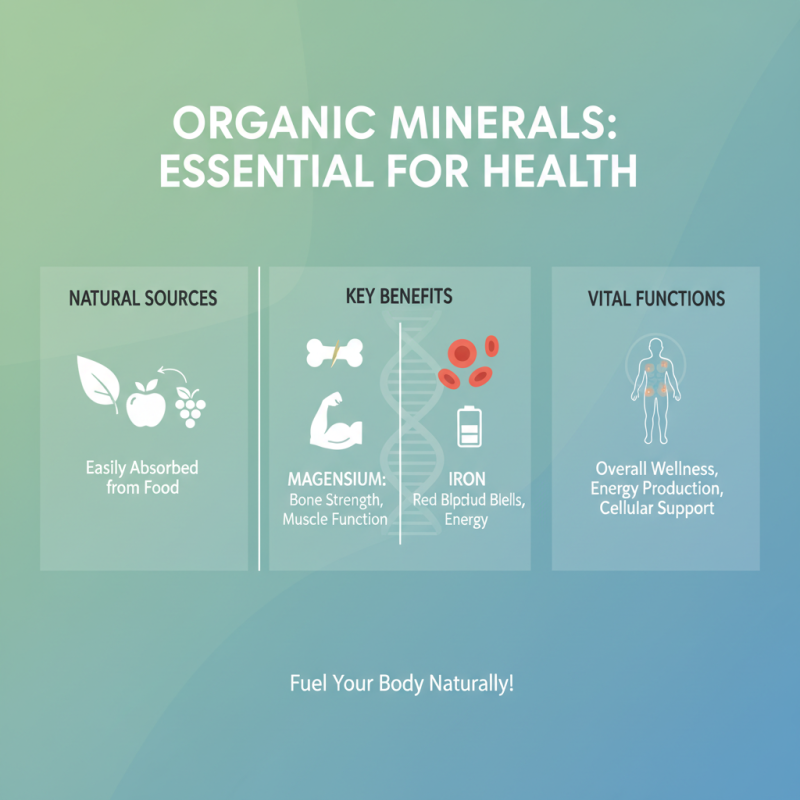
Organic minerals play a vital role in human health. They are essential nutrients that our bodies need for various functions. These minerals come from natural sources, making them easier to absorb. For instance, magnesium boosts bone strength and helps with muscle function. Iron supports red blood cell production, preventing fatigue.
Incorporating organic minerals into your diet can improve overall wellness. Many people rely on supplements or fortified foods. However, getting these minerals from whole foods is often more effective. Leafy greens, nuts, and seeds are excellent options. People should consider their individual needs. Some might require more zinc or selenium than others.
Yet, it's crucial to find a balance. Overconsumption can lead to toxicity issues. For example, too much iron can cause gastrointestinal problems. Reflecting on dietary choices is key. Are we truly mindful of our mineral intake? Engaging with holistic nutrition can lead to better health outcomes.
Sources of Organic Minerals in Foods and Supplements
Organic minerals are becoming increasingly recognized for their vital roles in nutrition. You can find them in various foods and supplements. They are derived from plant sources, making them easier for the body to absorb. According to a report by the National Institutes of Health, organic minerals can enhance bioavailability, meaning your body can use them more efficiently.
Good sources of organic minerals include leafy greens, nuts, and seeds. These foods are rich in magnesium, iron, and calcium. Animal products, like meat and dairy, also contribute. However, many people don’t get enough minerals from their diets. A survey by the USDA indicates that over 50% of adults are deficient in key minerals like potassium.
**Tip:** Incorporate a variety of foods into your diet. This helps ensure you receive a broad spectrum of minerals. Supplements can also fill nutritional gaps. Yet, choose wisely and aim for products with organic certifications.
Over-reliance on processed foods could lead to mineral deficiencies. Many processed food options lack essential nutrients. Relying solely on supplements might not provide the same benefits as whole foods. It’s essential to consider food choices carefully. Aim for balance, integrating fresh, whole sources of organic minerals into your meals.
What Are Organic Minerals and Why Are They Important? - Sources of Organic Minerals in Foods and Supplements
| Mineral |
Source in Foods |
Source in Supplements |
Importance |
| Calcium |
Dairy products, Leafy greens |
Calcium citrate, Calcium carbonate |
Bone health, Muscle function |
| Magnesium |
Nuts, Whole grains |
Magnesium oxide, Magnesium glycinate |
Energy production, Nerve function |
| Potassium |
Bananas, Potatoes |
Potassium chloride, Potassium citrate |
Fluid balance, Muscle contraction |
| Iron |
Red meat, Spinach |
Ferrous sulfate, Ferrous gluconate |
Oxygen transport, Energy metabolism |
| Zinc |
Shellfish, Legumes |
Zinc oxide, Zinc picolinate |
Immune function, Wound healing |
Impacts of Organic Minerals on Soil and Agriculture
Organic minerals play a vital role in enhancing soil health and agricultural productivity. They are derived from the decomposition of organic matter. This process enriches the soil with essential nutrients, improving its fertility. Healthy soil leads to better crop yields and quality. Farmers notice the difference when they use organic minerals. The soil becomes more resilient, sustaining various plant life.
However, there are challenges. Implementing organic minerals can be inconsistent, especially in different climates and soil types. Not all organic minerals have the same effects. Some may take longer to show results. It is crucial for farmers to test their soil regularly. Observation can help in understanding the specific needs of their farmland. Adjustments may be necessary for optimal growth.
The impact of organic minerals extends beyond agriculture. They support biodiversity in the soil ecosystem. Diverse soils can retain water better and reduce erosion risks. But, this process can be slow. Improvement often requires patience and continuous care. Not every farm may have the resources for such practices, making it a reflection point for sustainable agriculture.
Impact of Organic Minerals on Soil Quality
This bar chart illustrates the impact levels of organic minerals on various soil properties. As shown, organic minerals significantly enhance soil pH, nutrient content, water retention, microbial activity, and ultimately improve crop yield.