Effective Food Attractant Tips for Successful Trapping
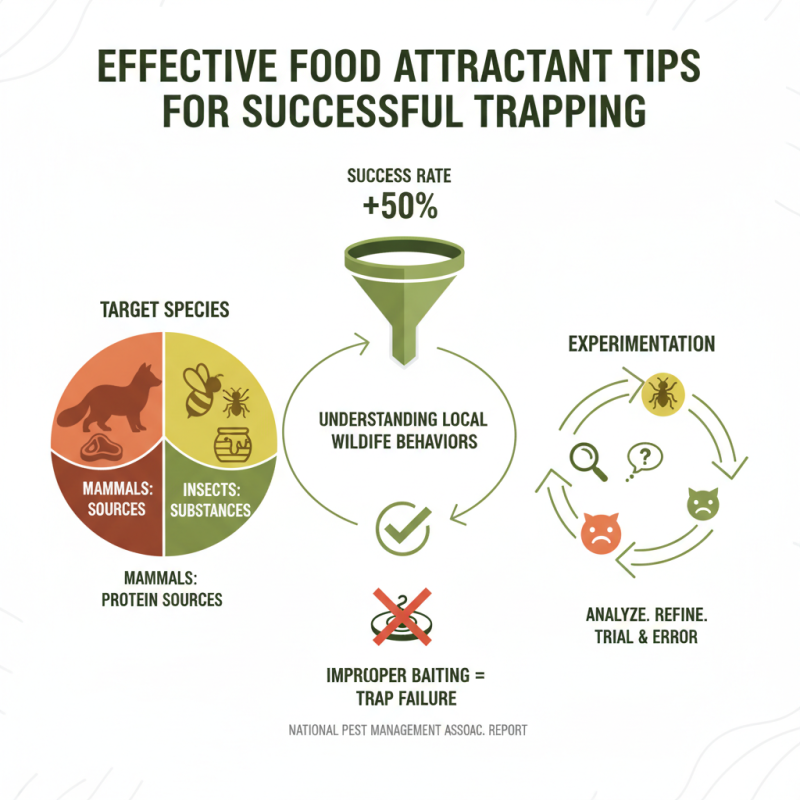
Effective trapping relies on the use of food attractants. Studies show that the right food attractant can increase trapping success by over 50%. The choice of attractant is crucial for targeting specific species. For instance, mammals are drawn to protein sources, while insects often favor sugary substances.
Understanding local wildlife behaviors can enhance your attractant strategy. Many traps fail not because of design but because of improper baiting. A National Pest Management Association report indicates that poor attractant choices lead to ineffective trapping.
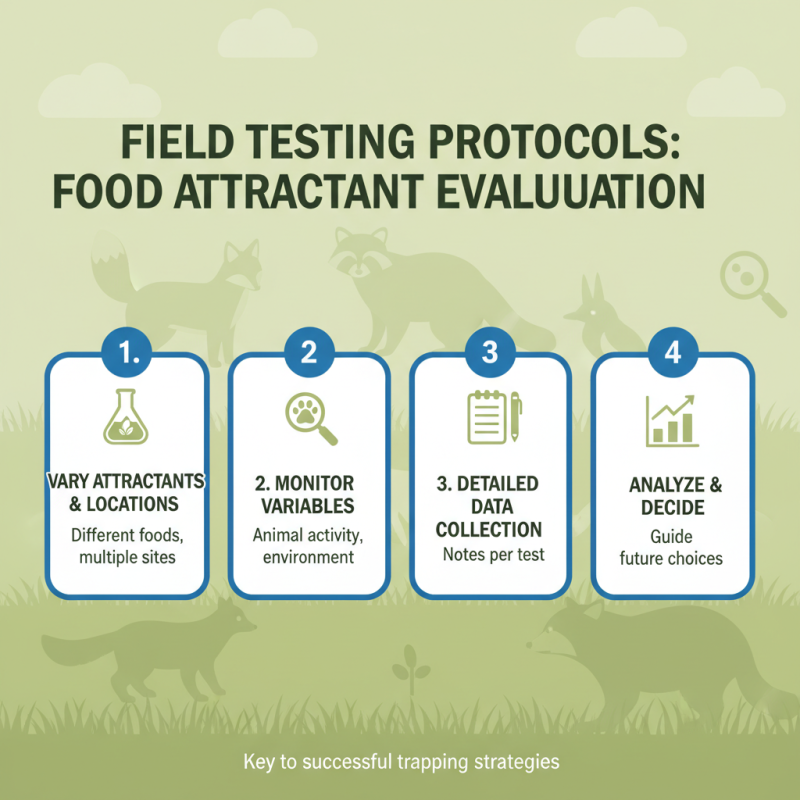
Experimenting with various food attractants can yield better results. It's important to observe how creatures respond to different baits. Not every attractant works equally for every species. Analyze successes and failures to refine your approach. Embrace trial and error in your trapping methods.
Effective Food Attractant Selection for Target Species in Trapping
Selecting the right food attractant is crucial for trapping success. Different species have unique preferences. For example, some rodents may be drawn to grains or seeds, while others favor fruits or vegetables. It's important to understand the target species to choose effectively.
Experimenting with various attractants can reveal what works best. You might find a specific bait gets ignored while another is devoured quickly. The scent of rotting fruit might attract some animals, but it could repel others. Trial and error is part of the process. Pay attention to the site’s environment too; some attractants may work better in certain conditions.
Consider the season and weather. Warm weather might produce a stronger scent that lures animals in. But a food source that was effective in spring might not work in winter. It's essential to adapt based on these changes. An unchanging approach can lead to disappointment. Being observant and flexible can lead to more successful trapping experiences.
Understanding the Role of Scent in Animal Behavior and Attraction
The sense of smell plays a crucial role in the behavior of many animals. Scents can attract or repel them. According to recent studies, many species rely on odors to find food and mates. Understanding this can enhance trapping success.
Choosing the right attractant is key. Natural scents often work better than synthetic ones. For example, using fermented fruits can draw rodents effectively. Studies show that food-based attractants increase capture rates by up to 30%. Experiment with different scents to see what works best in your area.
Tips for creating effective attractants include:
1. Use strong-smelling foods, like peanut butter or fish oil.
2. Try combining multiple scents for a stronger draw.
3. Refresh attractants regularly to maintain their potency.
Remember, not all animals will respond to the same smells. Observe and adapt based on your experiences. There is no one-size-fits-all solution. Some traps may go unused despite the right bait. This requires reflection on placement and timing.
Effective Food Attractant Usage in Trapping
Optimal Food Types and Their Efficacy in Various Trapping Situations
Choosing the right food attractant can greatly enhance your trapping success. Different animals respond to various food types. For instance, nuts and seeds attract rodents effectively. Smelly bait, like fish or meat scraps, works well for carnivores. Sweet fruits can entice some small mammals, but results are inconsistent.
Environment matters too. In dry areas, moisture-rich foods may be more effective. In contrast, vibrant scents can penetrate humid air better. However, some traps might remain unvisited despite optimal bait. This could be due to the wrong location or insufficient attractant quantity. Trapping is often a trial-and-error process. Reflection on what worked and what didn't is essential for future efforts.
While some might prefer easy solutions, the specifics can be ambiguous. The effectiveness of food types often varies by situation and animal behavior. Sometimes, the same location won’t yield the same results. Nature is unpredictable. Each attempt teaches valuable lessons.
Effective Food Attractant Tips for Successful Trapping - Optimal Food Types and Their Efficacy in Various Trapping Situations
| Food Type |
Target Species |
Efficacy Level |
Best Trapping Conditions |
| Peanut Butter |
Rats, Mice |
High |
Indoor/Outdoor, Dry Areas |
| Fruit (e.g., Apple) |
Squirrels, Raccoons |
Moderate |
Outdoor, Near Trees |
| Fish Scraps |
Cats, Dogs |
Low |
Near Water Sources |
| Cereal Grains |
Mice, Birds |
High |
Indoor, Pantries |
| Dog Food |
Coyotes, Foxes |
Moderate |
Outdoor, Near Open Fields |
Seasonal Considerations for Food Attractants in Wildlife Trapping
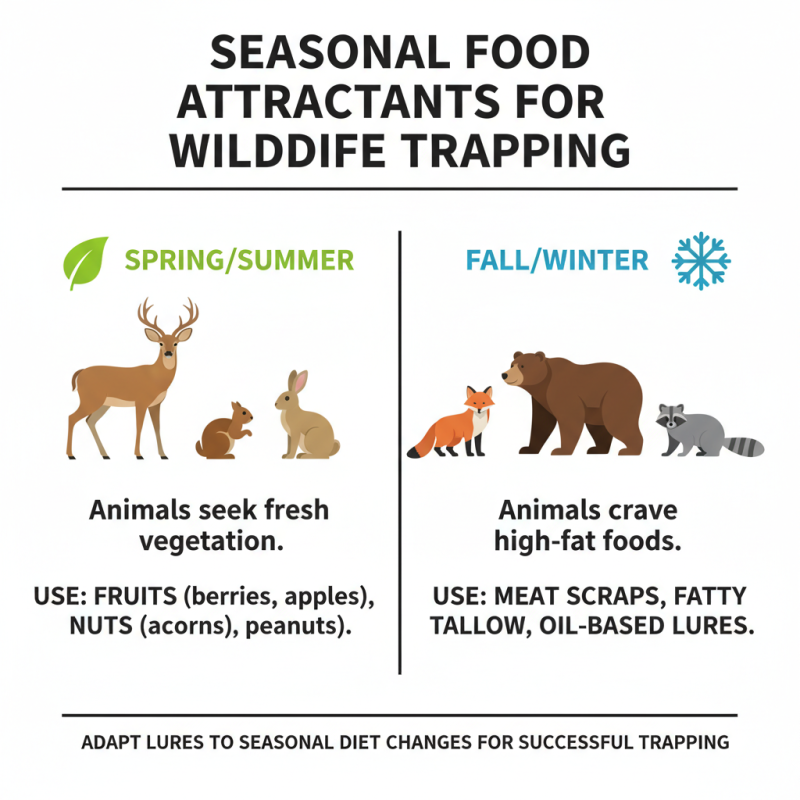
Trapping wildlife effectively often hinges on the right food attractants. Seasonal considerations play a crucial role. Different seasons bring about changes in animal behavior and food sources. For example, in spring, animals search for fresh vegetation. Using fruits or nut-based lures can work wonders. In colder months, high-fat food sources are more appealing.
Timing is everything. In autumn, the hustle of preparing for winter begins. Animals forage for high-energy foods. Products that mimic food items available in the wild can be more effective. Scents of rotting fruits or strong-smelling nuts might attract creatures that are hard to catch otherwise. Licorice, for example, attracts certain species during this season.
Reflecting on these nuances can enhance your trapping success. A simple miscalculation in choosing the right food for the season may lead to missed opportunities. Understanding local wildlife habits is essential. Adjusting attractants based on these seasonal changes may take time, but it’s worth the effort. Being observant and adaptable is key to a fruitful trapping experience.