How to Use DMPT for Enhanced Aquaculture Results?
Aquaculture is a rapidly growing industry, valued at over $250 billion globally in 2021. As the demand for seafood rises, producers are turning to innovative solutions to enhance yields. One such solution is DMPT, which stands for 2,4-Dimethylthiazole-2-thiazoline. This compound is garnering attention for its potential to promote fish growth and improve feed efficiency.
Recent studies indicate that DMPT can increase feed intake by up to 20%. This enhancement leads to better growth rates in fish and shrimp species. Implementing DMPT in aquaculture could address rising pressure on wild fish stocks. While the benefits are promising, challenges remain in optimizing dosage and understanding its long-term effects on aquatic ecosystems. More research is needed as industry practices evolve.
Farmers are seeking optimal strategies to balance profitability and sustainability. DMPT's role in aquaculture must be closely monitored. It brings hope but also requires critical assessment. Increased application in fish farming may transform production, but it must be approached with caution and continuous evaluation.
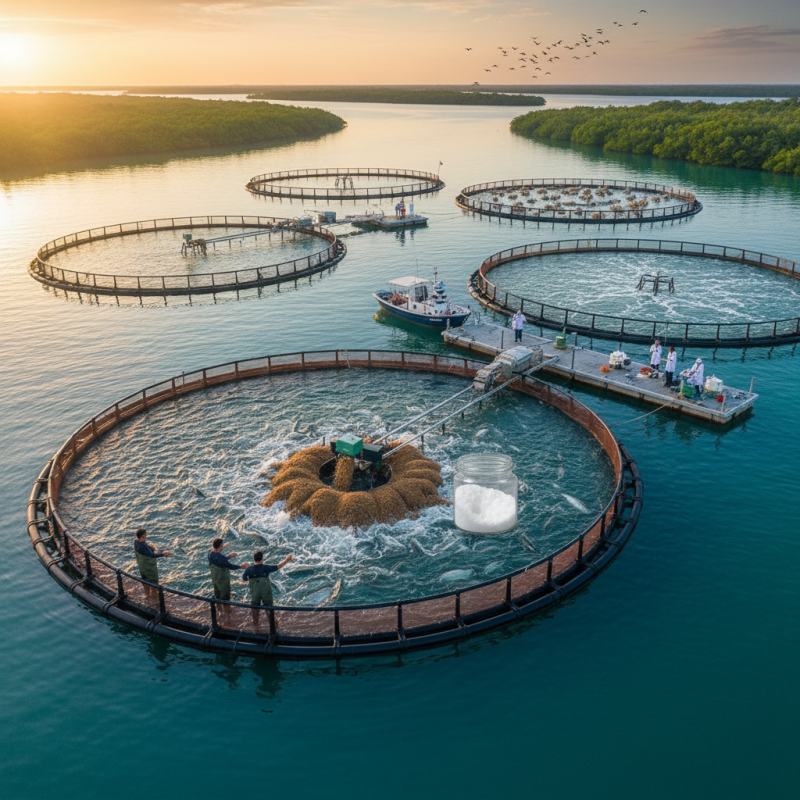
Understanding DMPT and Its Role in Aquaculture
DMPT, or 2-(N,N-Dimethylamino) propionic acid, has recently gained attention in aquaculture. It acts as a feeding attractant and growth stimulant for aquatic species. Understanding its role requires diving into how it impacts behavior and growth rates in fish and shrimp.
Many aquaculture operations report improved feed efficiency with DMPT. The compound enhances the palatability of feed, encouraging faster consumption. Studies show that fish often exhibit increased feeding response when DMPT is present. However, some aquaculturists still express concerns about the long-term effects of continuous DMPT use. They wonder if dependency issues may arise with certain species. It’s essential to balance its use to avoid potential drawbacks.
Regular monitoring is crucial. Observing behavior changes in aquatic organisms helps evaluate DMPT effectiveness. What works for one species might not be as effective for another. Each environment is unique, and adaptation is key. Experimentation with different concentrations can yield varied results, making careful observation necessary. The benefits are notable, but reflection on potential challenges will result in more sustainable practices in aquaculture.
Benefits of DMPT in Aquatic Animal Nutrition
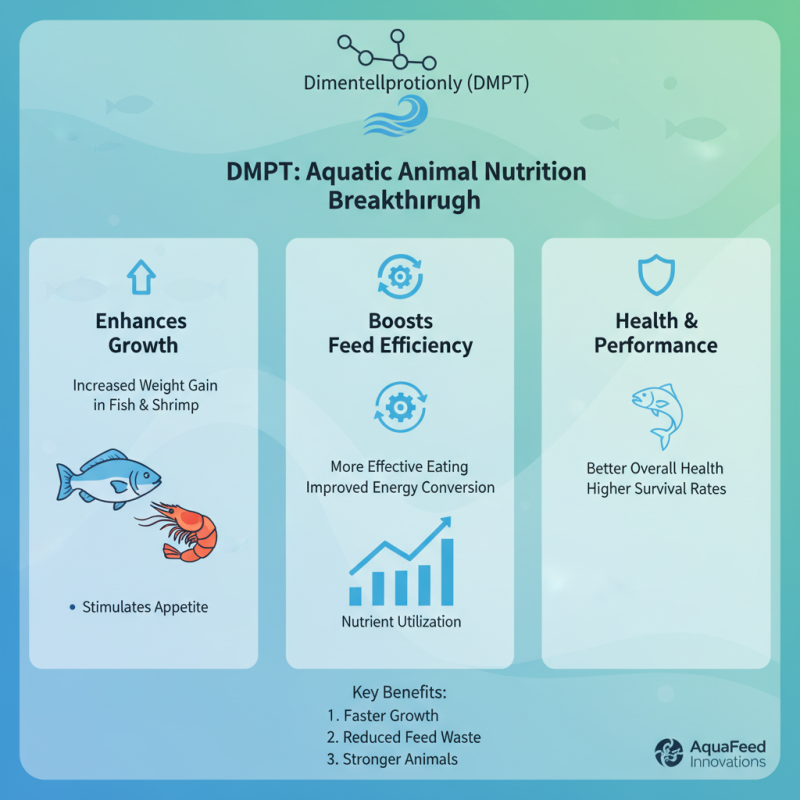
DMPT, or Dimethylpropionyl, is gaining attention in aquatic animal nutrition. Its role in enhancing growth and feed efficiency is notable. By incorporating DMPT into feed formulations, farmers often observe increased weight gain in fish and shrimp. This substance can stimulate appetite, making aquatic animals eat more effectively. Consequently, the energy conversion in these animals improves, leading to better overall health.
Moreover, DMPT is known to enhance nutrient absorption. When aquatic animals consume feed enriched with DMPT, their ability to utilize proteins and fats improves. This might result in brighter colors and better disease resistance in fish. However, some farmers report inconsistent results. Not all species respond similarly, which warrants careful consideration in usage. It’s essential to monitor the effects closely for each specific species.
There are also concerns regarding potential overuse. Farmers must balance the benefits of DMPT with possible long-term effects on aquatic ecosystems. Over-reliance on any supplement could lead to unforeseen consequences. Experimenting with DMPT requires understanding both its advantages and limitations. Continued research is crucial to fully unlock its potential in aquaculture.
Methods for Applying DMPT in Fish and Shrimp Farming
DMPT, or 2-(N,N-Dimethylamino)propionic acid, is gaining popularity in aquaculture. Its ability to boost feed intake in fish and shrimp is remarkable. Farmers are exploring various application methods to maximize its benefits.
One effective method is adding DMPT directly to feed mixtures. This incorporation can increase palatability. Fish and shrimp show enhanced feeding behavior with this approach. However, finding the right dosage is crucial; too much can lead to waste. Start with a small amount and observe the responses. Adjust as needed.
Another approach involves using DMPT in water. This can stimulate natural feeding responses. However, water quality must be monitored closely. High concentrations may cause issues, so a balanced approach is essential. Flexibility in application methods can lead to improved growth rates. Reflections on these practices may reveal areas needing improvement. Understanding the nuances of DMPT application is vital for successful aquaculture.
Monitoring DMPT Effects on Growth and Survival Rates
Monitoring the effects of DMPT (dimethylpentylthiophene) on growth and survival rates in aquaculture can yield significant insights. Studies indicate that DMPT can stimulate feed intake and enhance metabolic activity in fish. For example, research published in 2022 shows that incorporating DMPT in feed can lead to a 20% increase in growth rates within the first 30 days. This data suggests a notable correlation between DMPT and improved feed efficiency.
Nevertheless, understanding the full scope of DMPT's impact requires careful monitoring. Researchers found that while growth rates increased, the survival rate didn’t show the same improvement. In some trials, survival rates plateaued even with higher growth metrics. This discrepancy raises questions about the long-term effects of DMPT on fish health. Tracking feed conversion ratios can provide deeper insights into this relationship.
Regular assessments of water quality are equally crucial. Elevated levels of ammonia and nitrite can emerge due to increased feeding. In a recent report, 35% of fish farmers noted higher mortality rates linked to poor water conditions as DMPT usage increased. This underscores the importance of a balanced approach when integrating DMPT into aquaculture practices. Monitoring growth and survival rates in tandem can help identify these challenges early on.
Effects of DMPT on Growth and Survival Rates in Aquaculture
Best Practices for Integrating DMPT into Aquaculture Operations
Integrating DMPT into aquaculture operations can significantly enhance growth rates. DMPT, as a feed attractant, helps stimulate feeding behavior. When included in fish diets, it increases feed intake and improves overall health. Using DMPT effectively requires attention to dosage. Too much can deter fish rather than help them. Adjusting the concentration based on species is crucial. Not all fish respond the same way.
Monitoring fish response is essential once DMPT is added. Observing changes in behavior after feeding can provide immediate feedback. However, some farmers may overlook this. Keeping a daily log of fish activity and growth helps in understanding the impact. Pay attention to variations across different phases of growth. Adjustments may be necessary as fish mature.
Consistency is key in application. Ensuring that DMPT is mixed evenly in feed is important for distribution. Some operators struggle with this aspect. Regular training on mixing techniques can be beneficial. However, it's easy to become complacent with routine. Periodic reassessment of DMPT integration practices can lead to better results. Being open to refining techniques fosters continuous improvement in aquaculture operations.
How to Use DMPT for Enhanced Aquaculture Results? - Best Practices for Integrating DMPT into Aquaculture Operations
| Parameter |
Recommended Levels |
Benefits |
Best Practices |
| DMPT Concentration |
1-5 g/kg |
Improves growth rates and feed conversion |
Gradually increase dosage to monitor fish response |
| Application Method |
In feed or water |
Enhances palatability and nutrient uptake |
Mix thoroughly in feed or ensure even dispersion in water |
| Frequency of Use |
Daily or bi-weekly |
Consistent benefits over time |
Adjust based on growth stage of aquatic species |
| Species Compatibility |
Fish and crustaceans |
Widely accepted by many aquaculture species |
Test on small groups before full application |
| Monitoring |
Weekly assessments |
Ensures optimal dosage and health |
Keep records of growth and health indicators |