Why is Cobalt Sulphate Important in Industry and Technology?
Cobalt sulphate is gaining attention in various industries for its unique properties. Dr. Emily Hart, a leading expert in battery technology, states, "Cobalt sulphate is critical for enhancing battery performance." This compound plays a significant role in producing lithium-ion batteries, essential for electronics and electric vehicles.
Production of cobalt sulphate involves complex processes that can impact quality. The importance of quality control cannot be overstated. Even minor impurities can diminish its effectiveness in applications. Additionally, sustainable sourcing remains a challenge in the industry. Ethical concerns often emerge regarding cobalt extraction methods.
The future of cobalt sulphate relies on innovation and responsible practices. As demand grows, industries must adapt. Dr. Hart emphasizes the need for balance: "We must prioritize both performance and sustainability in cobalt sulphate production." This balancing act is crucial for meeting technological advancement goals while addressing environmental concerns.

Importance of Cobalt Sulphate in Industrial Applications
Cobalt sulfate plays a crucial role in various industrial applications. It is widely used in the manufacturing of rechargeable batteries. According to a 2022 report by Fortune Business Insights, the global battery market is expected to grow by over 25% annually. This growth is driven largely by the demand for electric vehicles and energy storage systems. Cobalt, found in these batteries, enhances performance and longevity.
In addition to batteries, cobalt sulfate is important in the production of catalysts for the chemical industry. These catalysts accelerate reactions in fuel cells and refining processes. The International Energy Agency reported that fuel cell technology could reduce carbon emissions significantly. Cobalt sulfate’s effectiveness in these applications cannot be overlooked.
However, the supply of cobalt is often limited. Ethical sourcing remains a challenge, with many supplies coming from regions facing human rights issues. Industries need to reflect on the implications of their sourcing strategies. Sustainable alternatives are being explored, yet they are still in development. The future of cobalt sulfate in industry depends on addressing these significant challenges.
Role of Cobalt Sulphate in Battery Manufacturing and Energy Storage
Cobalt sulphate has become crucial in battery manufacturing and energy storage. This compound plays a significant role in the production of lithium-ion batteries, which are widely used in electric vehicles and renewable energy systems. According to a recent industry report, the demand for cobalt in batteries is projected to reach over 200,000 tons by 2025.
The unique properties of cobalt sulphate enhance battery performance. It increases energy density, extends battery life, and improves efficiency. Batteries formulated with cobalt sulphate typically operate better under high-stress conditions. However, sourcing cobalt presents ethical challenges, as mining can lead to environmental degradation and labor rights issues.
Tips: If you're considering battery innovation, explore alternatives to cobalt. Research developments in battery chemistries that reduce reliance on cobalt. This could address sustainability concerns.
Over-reliance on cobalt may lead to supply shortages. The market is volatile, and pricing can fluctuate significantly. Engineers and manufacturers need to stay informed about supply chain dynamics. Awareness of these factors can lead to more balanced, sustainable production methods. The industry faces pressure to innovate while navigating ethical sourcing challenges.
Cobalt Sulphate's Contribution to Catalysis and Chemical Reactions
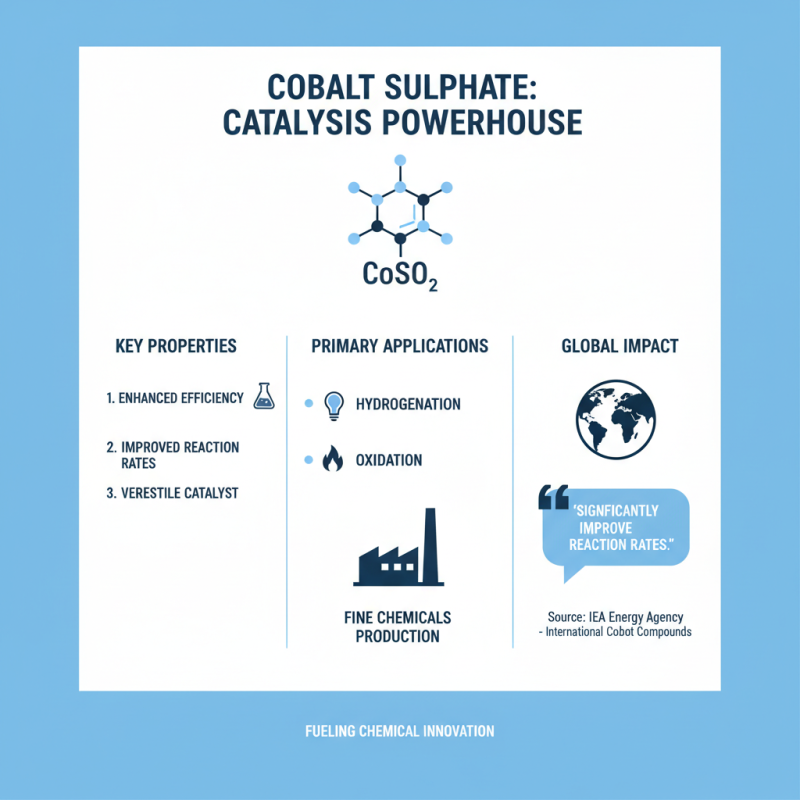
Cobalt sulphate plays a vital role in catalysis and chemical reactions. Its unique properties enhance the efficiency of various processes. For instance, a report from the International Energy Agency highlights that cobalt compounds can significantly improve reaction rates in hydrogenation and oxidation reactions. This makes them valuable in the production of fine chemicals.
In addition to enhancing speed, cobalt sulphate contributes to selectivity. Research indicates that cobalt-based catalysts can increase product yields by over 30% in specific reactions. Such efficiency is critical in industries ranging from pharmaceuticals to petrochemicals. However, it is essential to recognize the environmental impact of cobalt mining. Extractive practices often lead to significant ecological damage, raising concerns in sustainable chemistry.
As industries adopt cobalt sulphate in their processes, they must weigh benefits against potential drawbacks. The push for greener alternatives is growing. Continuous improvement in catalyst design is necessary. Innovations can reduce the reliance on cobalt or improve extraction methods. These steps are crucial as the industry evolves towards more sustainable practices. The dual nature of cobalt sulphate’s impact warrants further exploration and reflection.
Impact of Cobalt Sulphate on Agriculture and Nutrient Solutions
Cobalt sulphate plays a significant role in agriculture. Farmers use it to enrich soil nutrients. Cobalt is essential for plant growth, particularly for legumes. Legumes fix atmospheric nitrogen. This nitrogen fixation improves soil fertility.
In nutrient solutions, cobalt sulphate supports plant metabolism. It helps synthesize certain enzymes. These enzymes are vital for photosynthesis and growth. However, applying too much can lead to toxicity. Finding the right balance is crucial. Overuse may harm beneficial microbial life in the soil.
Farmers must also consider the source. Cobalt can come from various suppliers. Quality and concentration may vary. This inconsistency could impact crop yields. Sustainable practices are essential in managing cobalt usage. Reflection on methods and practices is necessary for long-term success.
Why is Cobalt Sulphate Important in Industry and Technology? - Impact of Cobalt Sulphate on Agriculture and Nutrient Solutions
| Application Area |
Description |
Impact |
Nutrient Content |
| Agriculture |
Used as a micronutrient in fertilizers. |
Enhances plant growth and yield. |
Cobalt: 0.1 - 0.5% |
| Animal Nutrition |
Essential for livestock diets. |
Improves health and reproductive performance. |
Cobalt: 0.01 - 0.05% |
| Battery Production |
Component in lithium-ion batteries. |
Increases energy density and life span of batteries. |
Cobalt: 10 - 20% (in battery cathodes) |
| Catalyst Production |
Used in catalytic converters. |
Reduces toxic emissions from vehicles. |
Cobalt: variable, depends on application. |
| Chemical Industry |
Raw material in various chemical processes. |
Enhances efficiency of chemical reactions. |
Cobalt: 0.5 - 3% depending on the chemical being produced. |
Environmental and Economic Considerations of Cobalt Sulphate Usage
Cobalt sulphate plays a critical role in various industries. Its primary use is in the production of rechargeable batteries. The demand for electric vehicle batteries has surged. In fact, the market for cobalt sulphate is projected to reach USD 5.56 billion by 2026, demonstrating a compound annual growth rate of 14.4%.
However, the environmental implications are significant. Cobalt mining and processing can lead to severe habitat destruction. Contaminated water sources can arise from improper disposal practices. Reports indicate that mining operations in the Democratic Republic of Congo contribute to over 60% of global supply. This raises ethical concerns about labor practices and the environmental impact.
Economically, cobalt sulphate's importance cannot be understated. It enhances the efficiency of battery technology, making energy storage more viable. Yet, reliance on this material creates vulnerabilities. The volatility of cobalt prices can destabilize markets. Over-reliance on cobalt also pushes industries to seek alternatives, leading to ongoing research into sustainable practices. Balancing economic benefits with environmental responsibility remains a complex challenge.
Cobalt Sulphate Usage in Different Industries