Cobalt Sulphate Benefits and Uses in Industry Today?
Cobalt sulphate plays a vital role in various industrial applications today. The demand for cobalt has surged in recent years, primarily due to its importance in rechargeable batteries. According to a report by IDTechEx, the cobalt market is projected to grow significantly, reaching over $10 billion by 2025. This growth signifies a robust increase in the production of electric vehicles and consumer electronics.
Dr. Robert H. David, a leading expert in the cobalt industry, emphasizes, "Cobalt sulphate is essential for battery production. Its efficiency cannot be underestimated." This highlights the compound's crucial role in modern technology. It not only supports energy density but also enhances battery stability and lifespan.
Despite its benefits, challenges persist. Ethical sourcing of cobalt remains a concern. Many industries are reflecting on their supply chains. Balancing production with sustainability goals is imperative. Companies must question if they are doing enough to ensure responsible sourcing. As the industry evolves, cobalt sulphate will continue to be a focal point for growth and improvement.
Cobalt Sulphate: An Overview of Its Chemical Properties
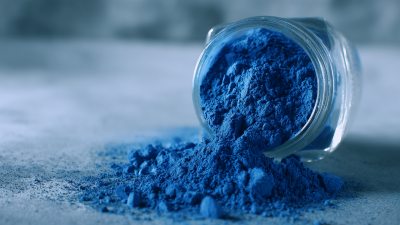
Cobalt sulphate is a well-known inorganic compound. It appears as
blue crystalline salts. This chemical has remarkable solubility in water. It's widely used in various industries
due to its unique properties.
In chemical formulations, cobalt sulphate serves multiple roles. It is a vital component in producing rechargeable batteries.
Its role in battery production enhances energy density. Additionally, this compound is used in dye manufacturing. The deep blue
color it imparts is highly sought after.
However, cobalt sulphate also poses challenges. Handling it requires care due to potential toxicity.
Safety measures are essential in industrial applications. While its benefits are plentiful, the environmental impact
remains a concern. Industries must find a balance between use and safety.
Historical Context of Cobalt Sulphate Usage in Industry
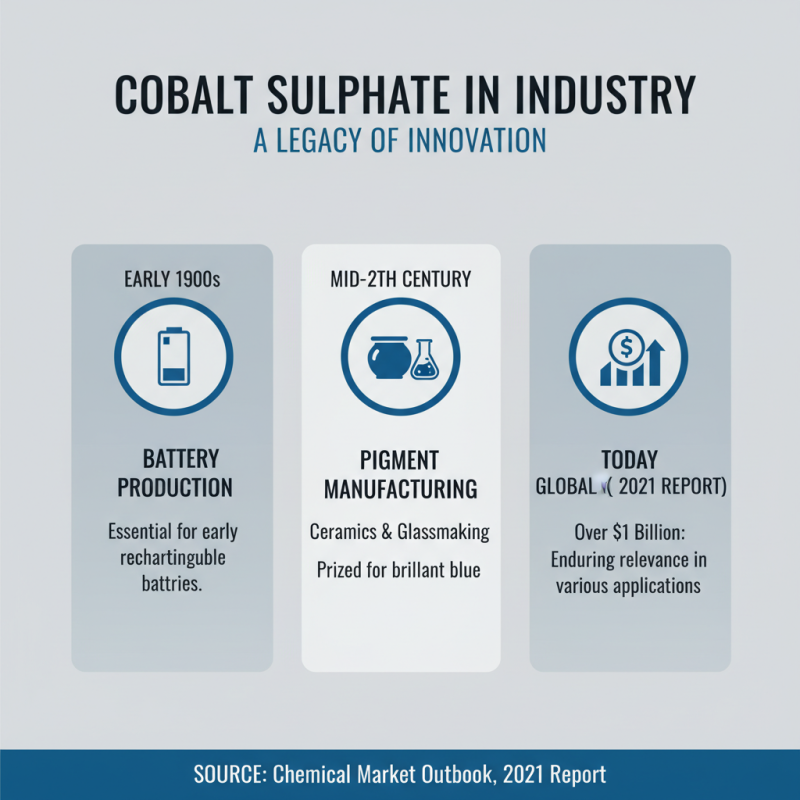
Cobalt sulphate has a long history in industrial applications. It has been used since the early 1900s, primarily in the production of batteries. In the 1930s, cobalt sulphate gained attention in the manufacturing of pigments. Its vibrant blue hue made it a favorite in ceramics and glassmaking. According to a 2021 report by the Chemical Market Outlook, the global cobalt sulphate market was valued at over $1 billion, indicating its enduring relevance.
In the electronics sector, cobalt sulphate is crucial for lithium-ion batteries. Data shows that about 50% of the cobalt consumed globally goes into batteries. However, sourcing cobalt remains a challenge. The mines often have environmental and ethical concerns. Some reports highlight these issues, calling for more sustainable practices. This tension questions what "progress" really means in industrial production.
Despite its benefits, cobalt sulphate usage poses risks. The extraction process can lead to pollution. Historical practices have often overlooked safety standards. As industries evolve, there’s a growing need for reflection on these practices. This ongoing conversation shapes the future of cobalt sulphate in our industries. It is a reminder that progress must also include responsible stewardship.
Key Benefits of Cobalt Sulphate in Manufacturing and Technology
Cobalt sulphate is increasingly important in various industries. It plays a crucial role in manufacturing batteries, particularly lithium-ion batteries. The global demand for electric vehicles is pushing cobalt sulphate use. According to a recent market analysis, the cobalt sulphate market is projected to grow at a CAGR of 6.5% from 2023 to 2030.
In terms of technical applications, cobalt sulphate is used in electroplating and as a catalyst. It enhances the durability of coatings applied to metals. This property is crucial in sectors like aerospace and automotive. However, the environmental impact of cobalt mining raises questions. Responsible sourcing is vital but often overlooked. Industry reports indicate a need for sustainable practices to reduce ecological footprints.
While cobalt sulphate provides distinct advantages, there are limitations. The fluctuations in cobalt prices can affect production costs. Some manufacturers may struggle to adapt to these changes. Additionally, dependence on cobalt raises concerns about supply chain stability. Investigating alternative materials could offer a solution, but requires extensive research. Balancing benefits and challenges is essential for future strategies.
Applications of Cobalt Sulphate in Agriculture and Animal Nutrition
Cobalt sulphate plays a vital role in agriculture and animal nutrition. Farmers use it as a supplement to enhance livestock health. Cobalt is essential for vitamin B12 synthesis, which is crucial for animal growth and metabolism. A report from the Food and Agriculture Organization indicates that cobalt deficiencies can severely impact livestock production, leading to economic losses.
In crop production, cobalt sulphate is beneficial for soil health. It aids in improving nitrogen fixation in legumes, which enhances soil fertility. A study revealed that applying cobalt can increase crop yields by up to 15%. However, the dosage must be monitored. Too much cobalt can lead to toxicity, impacting crop and animal health.
Despite its benefits, there is still much to learn about cobalt sulphate applications. Research on optimal usage rates is ongoing. Farmers must remain cautious when applying it. Misapplication could harm both plants and livestock. Understanding the balance is crucial for sustainable agricultural practices.
Safety and Environmental Considerations for Cobalt Sulphate Usage
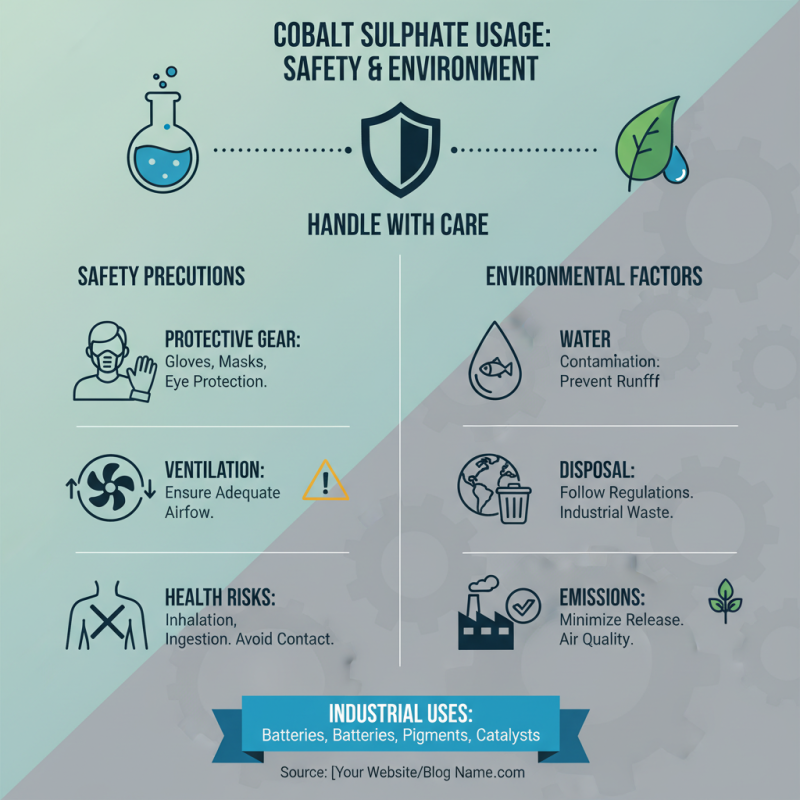
Cobalt sulphate is widely used in various industries, but safety and environmental factors are crucial. It's vital to handle cobalt sulphate with care. Exposure can lead to health issues if inhaled or ingested. Proper protective gear, like gloves and masks, is essential. Ensure adequate ventilation in workspaces.
The environmental impact of cobalt sulphate cannot be overlooked. If spilled, it can contaminate soil and water. This risk highlights the need for strict safety protocols. Industries must have containment measures in place. Regular training on handling emergency situations is also necessary. Reducing waste and recycling cobalt can help alleviate some environmental concerns.
Awareness of these issues is increasing. However, consistent efforts are required to improve safety practices. Companies should regularly review their protocols. This can prevent accidents and reduce harm to both workers and the environment. Balancing industrial benefits with responsibility is challenging but essential.