How to Choose a Mineral Premix Supplier in 2026?
Choosing a Mineral premix supplier in 2026 is not just a price comparison. It is a decision about consistency, traceability, and dependable support. A small variation in mineral concentration can affect formulation and production planning. The right supplier should explain how product specifications are set, checked, and updated. Details matter.
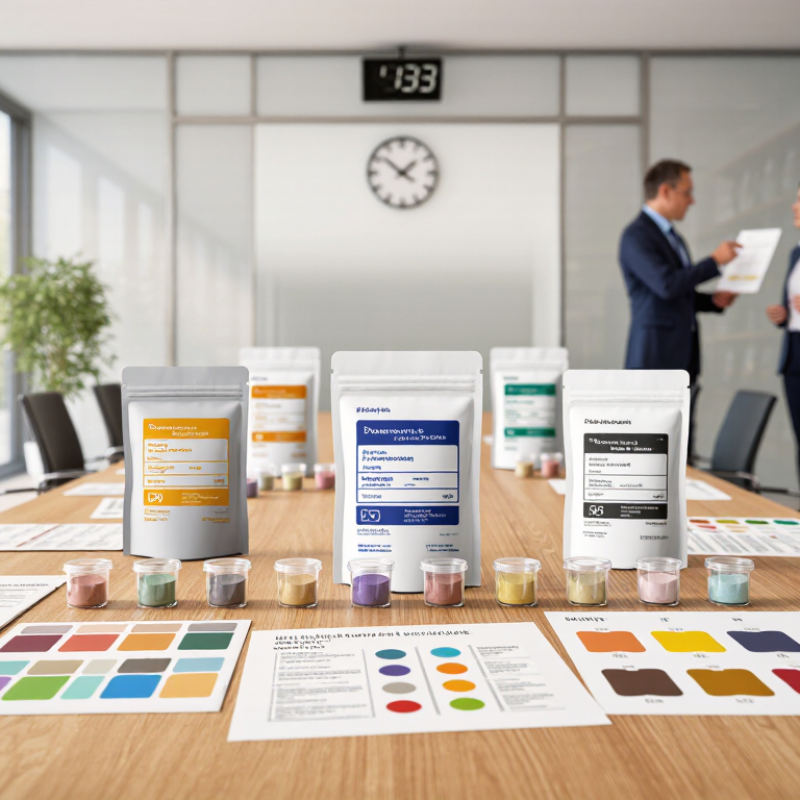
Look beyond a polished brochure. Ask for recent certificates of analysis, clear ingredient specifications, and batch traceability. Check how the supplier handles sampling, testing, and out-of-specification results. Reliable documentation should connect a delivered lot to its production records. Packaging matters, too: sealed bags, readable labels, and suitable storage guidance help protect product quality. Ask who answers technical questions when a formulation changes or a shipment is delayed.
Compare suppliers on more than quoted price. Review production capacity, quality controls, delivery performance, and the practical limits of customization. Confirm that their quality systems and product documentation fit your operation and applicable requirements. If possible, request a sample and assess it against your own acceptance criteria. A site visit or independent audit may offer useful evidence, but neither guarantees every future batch. That is worth remembering. No checklist removes all risk.
This guide outlines the questions buyers can ask before committing to a supplier. It considers quality evidence, technical service, supply resilience, and total cost. The best choice is not always the largest company or the lowest bid. It is the supplier whose claims are specific, verifiable, and consistent with your needs.
Define Your Mineral Premix Requirements and Target Applications
Before comparing suppliers, define what the premix must do. Identify the animal species, age or production stage, and daily intake assumptions. A calf ration, a layer diet, and a fish feed do not share the same mineral targets. Be specific. Note whether the product will be used in complete feed, concentrate, or on-farm mixing, since each route changes dosing and handling needs.
List the required minerals and acceptable ranges instead of asking for a generic “high-quality” blend. Consider mineral form, bioavailability, particle size, solubility, and interactions with other ingredients. Check existing feed and water contributions too; overlooking background minerals can distort the target. It happens. Record the batch size, mixer type, and expected storage conditions. Fine powders may separate during transport, while humid storage can cause caking.
For each application, define measurable acceptance criteria: guaranteed analysis, specified variation, contaminant limits, batch documentation, and shelf life. Ask for a representative specification and certificate of analysis, then confirm that test methods and units match your formulation records. Small details matter. If requirements remain uncertain, mark them as assumptions and review them with a qualified nutritionist before requesting quotations. Suppliers can compare like with like, but a vague brief may produce a neat-looking quote that misses the real use case.
Verify Supplier Expertise, Certifications, and Regulatory Compliance
A mineral premix supplier should demonstrate technical expertise, not just offer a polished product sheet. Ask who approves formulations, how staff assess ingredient interactions, and how specifications change when raw materials vary. Request a recent certificate of analysis and match its batch number to the delivery label. Small details matter.
Alltech’s 2024 Agri-Food Outlook estimated global feed production at 1.29 billion metric tons in 2023. At that scale, consistent supplier controls are essential. WHO estimates that contaminated food causes about 600 million illnesses and 420,000 deaths worldwide each year. This is not a premix-specific risk measure, but it underscores why upstream controls deserve scrutiny. Paperwork alone is not proof.
Check that certifications cover the actual production site and product scope, and confirm their validity with the issuing body. Ask for audit findings, traceability procedures, and evidence of routine testing for relevant contaminants. Regulatory requirements vary by destination, so verify applicable registrations, labeling rules, and documentation before purchase. Then compare. A mismatch between a certificate, specification, and batch record needs a clear explanation. No supplier is perfect; a candid account of a deviation and its corrective action can be more informative than a flawless-looking file.
How to Choose a Mineral Premix Supplier in 2026
Suggested buyer-defined evaluation weights—not industry survey results.
Prioritize regulatory compliance and product quality, then verify expertise, certifications, and traceability. Check that documentation matches the markets served, such as applicable feed-safety requirements under EU Regulation (EC) No 183/2005 or FDA 21 CFR Part 507. Certifications should be independently verified and relevant to the supplier’s scope.
Assess Ingredient Quality, Testing, and Batch Traceability
A mineral premix can look consistent in a sealed bag, yet appearance tells little about its true composition. Ask suppliers for ingredient specifications, source details, and recent certificates of analysis. Check whether listed mineral forms suit your formulation and whether key nutrients are tested with appropriate methods. A neat document is not proof by itself. Request results tied to the actual production lot, not just a typical sample.
Testing should cover identity, concentration, and relevant contaminants, with methods and acceptance limits stated clearly. Ask who performs the analysis, how often samples are taken, and whether an independent laboratory checks selected batches. Compare reported values with declared tolerances. Small differences matter. Also ask how samples are retained and how out-of-specification results are investigated. A supplier that explains limitations plainly may be more useful than one promising perfect consistency.
Traceability should connect each finished batch to incoming raw-material lots, production dates, and test records. Request a sample traceability report and see how quickly staff can retrieve it. Follow one mineral from its source document through blending and final release. The paperwork may still have gaps; noticing them is part of the assessment. Confirm how corrections, complaints, and batch holds are recorded, and who is responsible for each step.
Evaluate Total Cost and Select the Best-Fit Supplier
A quoted price per tonne is only the starting point when comparing mineral premix suppliers. Calculate cost at the farm or feed mill using the recommended inclusion rate and actual monthly volume. Add freight, handling, storage, testing, and losses from damaged or expired stock. Details matter.
Then check whether the supplier can consistently meet your formulation, particle size, and delivery schedule. Ask for recent certificates of analysis, ingredient specifications, batch traceability, and a clear process for handling out-of-specification material. Compare lead times, minimum order quantities, packaging, and technical support—not just unit price. A cheaper blend may require more inventory or extra handling work. That cost is easy to miss.
Request comparable quotes using the same formula, order size, delivery point, and service scope. Speak with production staff about mixing performance, then review supplier performance after several deliveries. One good sample is not proof of steady quality. A scorecard helps, but it may not capture every disruption; revise your assumptions when actual delivery and production data differ.