China remains a major force in the refined cobalt and battery-material supply chain. Its chemical producers supply Cobalt sulphate for lithium-ion cathode manufacturing, especially nickel-manganese-cobalt batteries. The International Energy Agency’s Global Critical Minerals Outlook 2024 identifies China as a leading player in cobalt refining and downstream processing. This position affects supplier availability, export logistics, and regional price differences.
However, identifying China’s “top” suppliers requires more than checking online rankings. The U.S. Geological Survey’s Mineral Commodity Summaries 2024 reports continued global dependence on cobalt for rechargeable batteries, while also highlighting supply-chain concentration risks. A reliable supplier should provide recent assay results, production capacity, traceable raw materials, and consistent battery-grade specifications. Factory audits matter. Website claims are not enough.
Prices change quickly. Cobalt sulphate quotations may reflect cobalt metal prices, purity, cobalt content, order volume, packaging, freight, taxes, and payment terms. Market references from Fastmarkets and Argus can support negotiations, but public prices rarely match every contract. A practical comparison should request the same specification, delivery term, and quantity from each supplier. Small details matter, such as whether the quotation includes drums, inland transport, or export documentation. A clean ranking is tempting, but it can mislead. Some smaller manufacturers may offer stronger quality control or faster customization than larger names. This guide reviews leading Chinese suppliers, purchasing indicators, and price factors through a cautious, evidence-based lens. Data can be incomplete. Verification remains essential.
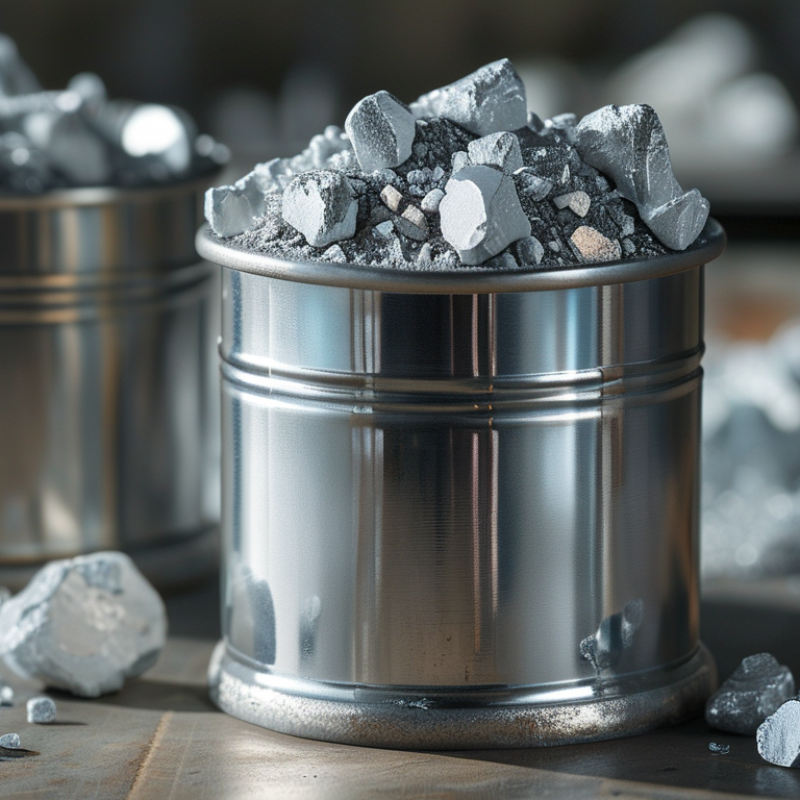
Cobalt sulfate is an inorganic cobalt salt, commonly supplied as a pink crystalline solid or prepared solution. Battery-grade material is often cobalt sulfate monohydrate, used to produce cathode precursor materials for rechargeable batteries. Its cobalt content, moisture level, and impurity profile strongly affect performance.
It also serves electroplating, pigments, ceramics, and selected agricultural applications under applicable safety rules. Industrial buyers usually evaluate cobalt assay, nickel, iron, copper, calcium, and insoluble residue. Small impurity differences can change downstream processing. Details matter.
China has many cobalt sulfate suppliers, including producers, processors, and trading companies. Their quoted prices may change daily with cobalt feedstock costs, exchange rates, energy expenses, packaging, and order volume. Battery-grade products normally command higher prices than technical grades because testing and purification are stricter. A low offer may hide weaker documentation, unstable supply, or different testing methods. Prices move. Buyers should request a recent certificate of analysis, production capacity, monthly availability, packaging details, and delivery terms. Comparing only the price per tonne is incomplete. I would also verify whether the quoted basis includes taxes, freight, inspection, and loading costs. Market data can look precise, yet it may quickly become outdated.

China’s cobalt sulphate supply chain is concentrated in coastal and central industrial provinces. Zhejiang and Jiangsu support mature chemical processing and export logistics. Hunan and Jiangxi provide strong links to battery-material manufacturing. Guangdong adds trading capacity and nearby cathode demand.
Supplier types differ. Large integrated refiners usually control feedstock, conversion, and quality testing. Medium chemical producers often offer flexible batches. Trading companies may provide faster delivery, but their traceability requires closer checking.
The International Energy Agency’s Global Critical Minerals Outlook 2024 estimates that China performs about 80% of global cobalt refining. This explains its strong position in cobalt sulphate supply. The USGS Mineral Commodity Summaries 2025 reports global cobalt mine production of roughly 290,000 tonnes in 2024. China still depends heavily on imported raw materials, so prices move with overseas supply, exchange rates, and refinery operating rates. Shanghai market assessments commonly quote cobalt sulphate by cobalt content, purity, payment terms, and delivery location. A single headline price can mislead.
Buyers should request recent assay reports, impurity limits, production capacity, and shipping records. Battery-grade material needs tighter controls than general industrial grades. Some smaller suppliers appear competitive but lack stable monthly output. That is a real risk. Regional comparisons are also imperfect because taxes, freight, and contract timing change the final cost. Price data needs context.
Cobalt sulphate suppliers in China commonly offer several grades for industrial processing, electroplating, pigments, and battery precursor production. The usual commercial form is cobalt sulphate heptahydrate, often supplied as blue or reddish crystals. Colour helps with quick inspection, but it cannot prove purity.
Not always.
A reliable specification should state cobalt assay, moisture, insoluble matter, and crystal form. It should also control nickel, copper, iron, calcium, magnesium, sodium, chloride, and other trace impurities. Battery-related material normally requires tighter impurity limits than general industrial material. However, “battery grade” is not a universal guarantee. Buyers should request the applicable standard, detailed technical specification, and a batch-specific certificate of analysis.
In practical purchasing, inspect whether the crystals arrive dry, free-flowing, and without excessive caking. Sampling matters because surface material may not represent the whole bag. Independent laboratory testing can verify cobalt content and critical impurities before regular orders begin. Ask for production dates, traceability records, packaging details, and storage conditions. Price usually follows cobalt content, purity, order volume, packaging, freight, and market quotations. A low offer may hide weaker moisture control or incomplete testing. I have seen appearance-based checks fail; a clean-looking solution can still exceed an impurity limit. Suppliers and buyers should review results together and adjust specifications when process conditions change.
China’s cobalt sulphate price begins with the cobalt metal benchmark. Domestic traders then adjust it for exchange rates, supply conditions, and production costs. A common battery-grade product contains about 20.5% cobalt, so a small metal-price movement can quickly change the quotation.
Feedstock availability matters greatly. The USGS Mineral Commodity Summaries 2024 recorded about 230,000 metric tons of mined cobalt production worldwide in 2023. China remains a major refining center, while imported hydroxide and intermediates supply much of its production. The International Energy Agency reported that China holds more than 80% of global cobalt refining capacity. Logistics, import duties, and port inventories therefore influence local offers.
Conversion costs are added next. These include sulphuric acid, electricity, labor, wastewater treatment, packaging, and financing. Sellers may also include value-added tax and delivery costs from coastal warehouses to battery plants. Monthly quotations from Chinese metals assessment services usually reflect these factors, but not perfectly. A tight hydroxide market can lift sulphate prices even when battery demand looks weak. That feels inconsistent, yet inventories often explain the gap.
Large qualified suppliers usually compete through stable cobalt content, low impurities, traceable documentation, and reliable delivery. Buyers should compare the same grade and tax basis. Otherwise, two prices may look different but describe nearly identical material.
| Data Dimension | Market Segment or Specification | Typical Technical Data | Indicative China Price Reference | Main Price Determinants | Common Supply Channel |
|---|---|---|---|---|---|
| Product identity | Battery-grade cobalt sulphate | Cobalt sulphate heptahydrate, commonly written as CoSO4·7H2O; cobalt content is usually specified at approximately 20.5% minimum. | Quoted per metric tonne of product | Cobalt content, impurity limits, crystal-water content, packaging, delivery point and payment terms. | Refiners, hydrometallurgical producers and specialist inorganic-salt manufacturers. |
| Cobalt content | Standard industrial or battery-grade material | Normally around 20.5% to 21.0% cobalt by mass for cobalt sulphate heptahydrate. | Higher cobalt content generally receives a premium | Assay is normally checked by laboratory analysis. A lower assay can lead to a discount or adjustment formula. | Direct contracts and qualified distributor channels. |
| Purity profile | Battery-material precursor grade | Low levels of nickel, copper, iron, manganese, calcium, magnesium, sodium, chloride and insoluble matter are typically required. | Premium versus general industrial grade | Impurity limits, consistency between lots, traceability and the buyer’s precursor-production qualification requirements. | Producers with quality systems and qualified battery-material supply chains. |
| Indicative historical price | China domestic battery-grade cobalt sulphate | Spot and short-term transaction references vary significantly with the cobalt raw-material cycle. | Approximately RMB 35,000–55,000 per tonne during lower-to-mid market conditions | Refined cobalt availability, cobalt hydroxide feed costs, cathode and precursor demand, inventories and producer operating rates. | Domestic spot transactions, tenders and monthly supply agreements. |
| Indicative historical price | China domestic battery-grade cobalt sulphate during a tight market | Prices can rise well above the lower-cycle range when feedstock supply is constrained or downstream restocking accelerates. | Approximately RMB 55,000–80,000+ per tonne in stronger market phases | Rapid cobalt price increases, limited intermediate supply, aggressive restocking and reduced spot availability. | Direct producer sales, strategic procurement and spot-market replenishment. |
| Price unit conversion | Approximate international comparison | Using an illustrative exchange rate of RMB 7.20 per US dollar. | RMB 35,000–55,000/t ≈ US$4,860–7,640/t | Actual conversion changes with the daily exchange rate. International offers may also include freight, insurance, duties and financing costs. | Export quotations, trading companies and negotiated long-term contracts. |
| Cobalt feedstock | Cobalt hydroxide or other cobalt-bearing intermediate | Feedstock is commonly priced by contained cobalt and may be subject to a payable percentage, treatment charge and impurity deductions. | Usually the largest variable cost component | International cobalt benchmark prices, cobalt hydroxide payable terms, origin, impurity penalties, freight and exchange rates. | Refineries, traders and integrated battery-material producers. |
| Sulphuric acid input | Reagent cost for hydrometallurgical production | Sulphuric acid is used to leach or dissolve cobalt-bearing feedstock before purification and crystallisation. | Normally a smaller cost component than cobalt feedstock | Regional acid availability, energy costs, freight, plant location and local chemical-market conditions. | Local chemical suppliers and integrated industrial-park utilities. |
| Energy and conversion | Refining, purification, evaporation and crystallisation | Costs include electricity, steam, water, labour, maintenance, waste treatment and production yield losses. | Added as a processing and conversion charge | Energy tariffs, plant utilisation, technology, recovery rate, environmental compliance and production scale. | Manufacturers operating hydrometallurgical or chemical-crystallisation facilities. |
| Packaging | Standard export or domestic packaging | Common formats include lined woven bags, composite bags or other moisture-resistant industrial packaging. | Usually included or separately charged per tonne | Bag type, palletisation, moisture protection, hazardous-goods requirements and destination regulations. | Factory direct, logistics providers and authorised distributors. |
| Delivery basis | China domestic delivered price | Price may include transport from the production site to the buyer’s warehouse or regional logistics hub. | Higher than ex-works by the applicable freight cost | Distance, road or rail freight, fuel prices, order size, delivery urgency and destination province. | Domestic producers, distributors and third-party logistics networks. |
| Export delivery basis | FOB China or CIF destination | FOB excludes main ocean freight and destination charges; CIF includes ocean freight and insurance to the named port. | Export price = China product price + export logistics and compliance costs | Container availability, port charges, ocean freight, insurance, customs documentation, duties and payment risk. | Export-capable producers and international trading channels. |
| Order quantity | Spot, small-lot and contract procurement | Large monthly or quarterly volumes generally receive more stable terms than small spot purchases. | Small lots may carry a premium of approximately 1%–5% | Production scheduling, working capital, inventory risk, inspection cost and supplier allocation. | Direct contracts for large buyers; distributors for smaller buyers. |
| Payment terms | Advance payment, telegraphic transfer, letter of credit or credit terms | Shorter payment periods generally reduce the seller’s financing and credit risk. | Credit or deferred payment may add a financing premium | Buyer creditworthiness, deposit level, contract duration, currency risk and banking costs. | Direct manufacturers, trading firms and export agents. |
| Market assessment basis | China spot-market reference | Reported prices may represent offer levels, bid levels or completed transactions rather than one official national price. | Always confirm date, region, grade and transaction basis | Different sources may use different tax treatment, delivery terms, lot sizes and product specifications. | Industry price assessments, exchanges, market participants and negotiated transactions. |
| Important pricing note: Cobalt sulphate does not have one fixed China-wide price. The figures above are indicative historical market ranges and calculation references, not a live quotation or a guaranteed transaction price. A purchase comparison should specify cobalt content, impurity limits, tax status, delivery basis, order quantity, payment terms, production date and inspection method. | |||||
Importing cobalt sulphate from China requires more than comparing online quotations. The USGS Mineral Commodity Summaries 2025 estimated global cobalt mine production at about 290,000 tonnes in 2024. Supply conditions can therefore change quickly. Request a dated quotation with purity, cobalt content, moisture, packaging, minimum order, and Incoterms clearly stated. Compare the quote with recognized market assessments, not an old marketplace listing.
Ask each supplier for a recent certificate of analysis, safety data sheet, production address, and batch traceability record. Check cobalt content, nickel, copper, iron, lead, arsenic, chloride, and insoluble matter. A sample should match the proposed commercial batch. Use an independent laboratory for verification before shipment. Good paperwork helps. It does not replace testing.
Review factory registration, quality-system certificates, export experience, and inspection procedures. Confirm whether the supplier is a manufacturer or a trading intermediary. Request production photographs, but treat them only as supporting evidence. Inspect loading, drum labels, pallet condition, and moisture protection. One practical weakness is relying on a single test result. Retesting a retained sample is safer. The Cobalt Institute’s market reports also show strong battery-sector demand, which may influence regional premiums and lead times. Check current freight, currency, and compliance costs before approving the final price.